
Overall Critical Reception
Whenever I revisit Fitzcarraldo, I’m always struck by the range and intensity of critical responses, both upon its release in 1982 and in the years since. Right from the outset, I could sense that many professional critics recognized something monumental, even audacious, about Werner Herzog’s vision and execution. Critical circles of the early 1980s buzzed with awe and skepticism in equal measure—awed by the logistical ambition of actually dragging a steamship over a mountain for the film, and skeptical of whether the experience was justified by the film’s narrative payoff. In my view, critics from major newspapers and film journals seemed both enchanted and slightly bewildered by Herzog’s approach, often highlighting the film’s physical production as inseparable from its artistry. Even critics who questioned its pacing or occasional indulgence seemed unable to dismiss the sheer force of its filmmaking.
As the film faded from theaters and settled into the canon of world cinema, I’ve noticed a gradual shift in how reviews frame Fitzcarraldo. What might have seemed excessive or erratic on first viewing later came to be hailed as a kind of cinematic fever dream, a rare epic whose behind-the-scenes exploits became legendary in their own right. I see retrospectives that praise Herzog’s refusal to separate life from art, and critics today consistently include Fitzcarraldo in discussions of daring cinema. The film’s reception, as I read it, matured from a mixture of disbelief and excitement toward near-universal acknowledgment of its singularity.
Yet I never sense uniformity—critical opinions remain nuanced and, at times, divided. While some commentators from both the original period and more recent scholarship describe the film as visionary, others point to moments that they perceive as ponderous or self-indulgent. For me, that tension is part of its ongoing appeal: the debates around Fitzcarraldo have never fully subsided, and critical champions are often just as vocal as its detractors. Over time, it has assumed a unique status—a touchstone for the conversation about ambition and madness in filmmaking itself.
Major Film Rating Platforms
- IMDb – In my experience navigating IMDb, I quickly notice that Fitzcarraldo has secured itself a consistently high rating with thousands of votes, which tells me that a substantial body of cinephiles remains engaged by the film. It’s rare to see older international films maintain such a position, and I interpret the voting pattern—a steady stream of respectable to outstanding ratings, with occasional outliers—as evidence of enduring interest. The reviews that accompany these scores often reflect the passions and frustrations of viewers grappling with Herzog’s grandiosity. When I see the typical breakdown, I realize most voters fall on the upper half of the scale, pointing toward admiration more than ambivalence, but with enough mid-range and low scores to reflect the film’s polarizing aspects.
- Rotten Tomatoes – I’ve always found the dichotomy between the Rotten Tomatoes critical “Tomatometer” and the audience rating to be especially revealing with Fitzcarraldo. The critical score on this platform is decidedly positive, indicating most professional reviewers recommend it. Written reviews here tend to praise the production’s ambition and spectacle. Yet I note that the audience score, while also positive, generally trends a bit lower than the critic consensus. When I sift through user commentary, I frequently encounter a split: some viewers are riveted by the film’s behind-the-scenes drama and the magnitude of Herzog’s vision, while others seem turned off by elements they view as slow or esoteric. The gap, modest but perceptible, underscores for me how Fitzcarraldo continues to impress critics while sometimes confounding or fatiguing certain general viewers.
- Metacritic – On Metacritic, where reviews are aggregated and weighed, I see a composite score that lands squarely within the “generally favorable” bracket. This tells me that the bulk of professional reviews, both at release and in more recent reappraisals, recognize significant value in Herzog’s film. What stands out to me here is the relative lack of extreme outliers; very harsh or lavishly exuberant scores are in the minority, suggesting a convergence of respect—even among those who wouldn’t necessarily call it a masterpiece. I think this balanced profile reflects a critical consensus that, for all its idiosyncrasies, Fitzcarraldo is a film of real achievement and lasting interest. When I compare it to similarly ambitious works of the era, I see that it fares remarkably well on this platform.
Audience Response and Popular Opinion
From conversations I’ve had and responses I’ve read, the gap between critical and audience reception of Fitzcarraldo fascinates me. Audiences willing to invest in its length and cadence seem to emerge with a sort of reverent awe for Herzog’s obsession with authenticity and spectacle. However, it’s clear to me that the film has never belonged to the category of universally beloved popular hits. Many viewers approach it with curiosity, often prompted by its reputation as a logistical marvel, but some fade in the face of its slow-burn approach and unorthodox character arcs.
I’ve noticed that audience reviews tend to cluster into two groups: those deeply moved or impressed by the audacity of the filmmaking, who articulate genuine admiration for both the on-screen drama and the infamous off-screen ordeal, and those left feeling alienated by what they consider glacial pacing and opaque storytelling. For the former group, the legacy and mythos of the production seem to amplify the impact—there’s often a sense of “I can’t believe Herzog actually did this.” For others, I sense the film’s structure and rhythm represent barriers that even the central feat can’t bridge.
In my discussions with cinephiles, I hear repeated references to Klaus Kinski’s mesmerizing performance and Herzog’s crazy commitment as reasons for their engagement. Yet casual audiences, who might try the film after hearing about its cult status, frequently express surprise at just how demanding they find it. While never achieving the kind of mass audience embrace enjoyed by more accessible films, Fitzcarraldo maintains a reputation as a rite-of-passage experience—revered by some as a singular achievement, but unpalatable to viewers with more conventional expectations for pacing or plot clarity.
Points of Praise
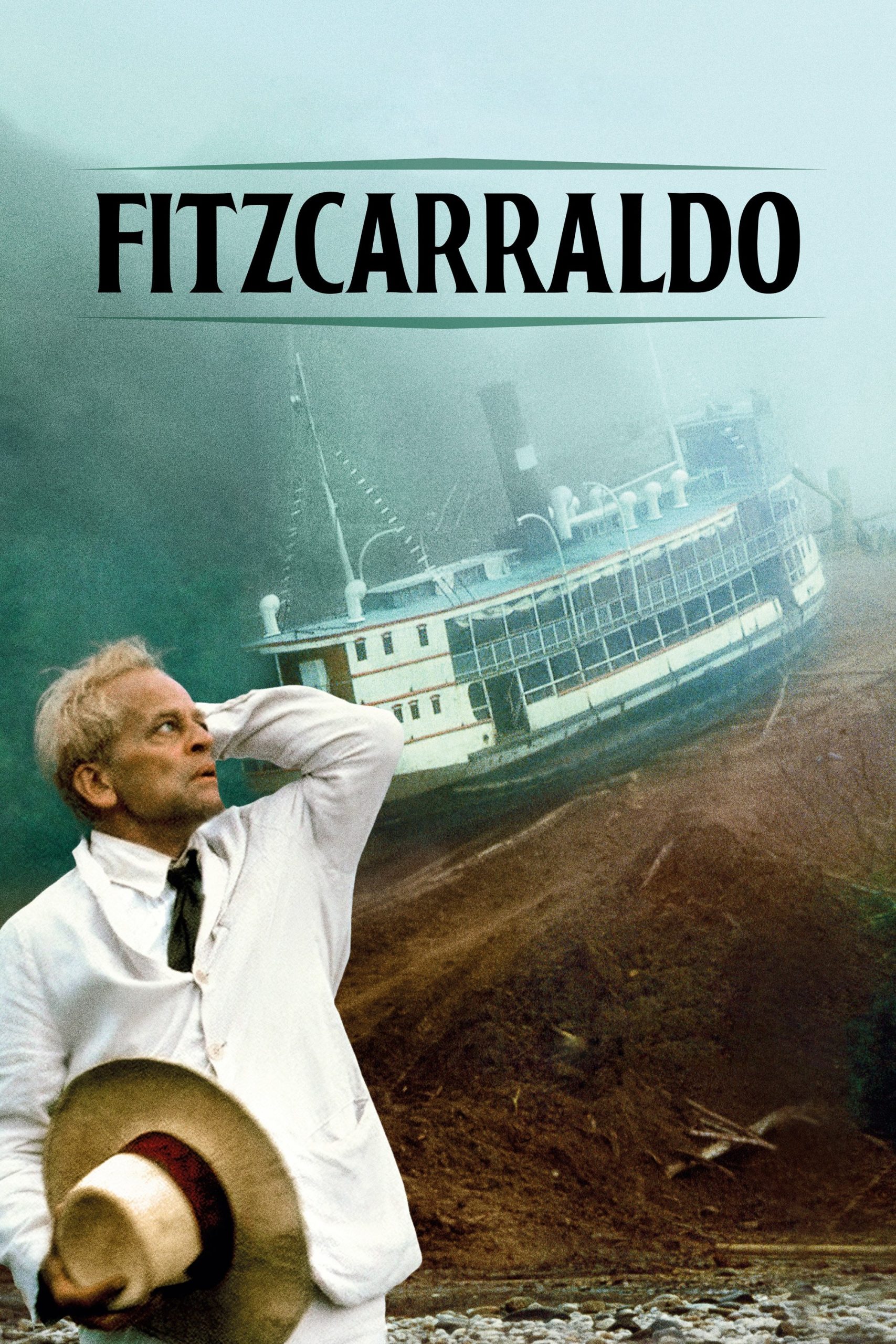
- Strength 1 – Unparalleled Production Ambition: I cannot think of another film that went so far in blurring the line between narrative and physical effort. Critics and audiences alike, myself included, often marvel at how Herzog committed to dragging a full-size steamboat over a mountain, not as a trick or optical illusion, but as a brute fact of the production. The physical reality underlying every frame brings a tangible sense of awe, and this feat continues to set the film apart in critical discussions.
- Strength 2 – Masterful Cinematic Imagery: I am constantly struck by the film’s visual intensity. Its river landscapes, the enormous ship, and the vibrant yet perilous jungle are captured with a kind of lyrical grandeur that’s become a hallmark of Herzog’s style. Many critics celebrated this aspect from the start, identifying the film’s poetic visuals as offering a form of immersive transport rarely achieved by contemporary cinema. This visual splendor, for me, is not just decorative—it shapes the entire viewing experience.
- Strength 3 – Engrossing Central Performances: Klaus Kinski’s performance routinely appears in both critical and audience reviews as both a blessing and a curse, but on balance, I find it to be the engine that drives the film’s intensity. His obsessive energy mirrors Herzog’s directorial audacity, and many reviewers single out his work as mesmerizing, unpredictable, and essential to the project’s overall impact. His dynamic with the camera, and indeed with the environment, emerges as a central reason the film lingers in cinematic memory.
Points of Criticism
- Criticism 1 – Protracted Runtime and Pacing: I’ve heard again and again, and found myself nodding along at times, that the film’s length and pacing are stumbling blocks for a significant portion of viewers. Critics who admire the film’s ambition sometimes nevertheless describe stretches as drawn-out or indulgent, and audience reviews often cite difficulty maintaining attention through its slower sections. The film’s deliberate tempo, while praised by some as hypnotic, frustrates others who expect more conventional narrative momentum.
- Criticism 2 – Accessibility and Audience Alienation: I perceive that the film, by virtue of its chosen style, can leave viewers feeling distanced or even alienated. The idiosyncratic structure, sparse exposition, and immersion in Herzog’s peculiar worldview mean that many narrative and emotional beats might go unrecognized by casual audiences. Critics, especially those reviewing outside of art-house or festival contexts, sometimes frame the film as more admirable than enjoyable, citing a lack of immediate emotional engagement.
- Criticism 3 – Ambiguous Character Motivations: I frequently read and hear comments regarding the opacity of the characters, especially the central figure as embodied by Kinski. While some critics and viewers praise this as part of the film’s enigmatic allure, others, myself included, sometimes find this ambiguity hinders emotional investment. Critics note that the internal drivers of the characters’ actions can feel underexplored, with motivation sometimes overshadowed by spectacle.
How Reception Has Changed Over Time
Watching how Fitzcarraldo’s reception has evolved gives me the sense of observing a myth in formation. At its debut, much of the talk, in print and conversation, centered around the sheer madness of its production and the overpowering personality of Herzog as a filmmaker. In the immediate aftermath, I found that critics and audiences alike were divided, some unsure if the achievement justified the toll. However, as years passed, retrospectives and scholarly articles began to frame Fitzcarraldo as essential viewing for any serious film lover.
Today, the film’s prestige has crystallized. The debates over its excesses remain, but I see more consensus around the magnitude of its achievement. In critical circles, it is now frequently discussed as one of Herzog’s defining works. Its challenges—both creative and physical—have become a badge of its singularity, and I notice younger critics and cinephiles often come to the film after watching “making-of” documentaries like Burden of Dreams, which only heightens their fascination.
I’m struck, too, by how audience response has shifted as knowledge of the film’s behind-the-scenes saga has spread. The physical feat is now integral to its legacy, attracting viewers who might otherwise overlook a film of its style or subject. What was once seen as off-puttingly slow by mainstream reviewers is often reinterpreted as transfixing by new admirers, though pockets of resistance remain. As a result, I feel confident saying that Fitzcarraldo’s reputation has steadily climbed, especially among film scholars and enthusiasts, while it remains something of an acquired taste for the broader public.
To go beyond scores and understand what shaped these reactions, background and interpretation can help.
🎬 Check out today's best-selling movies on Amazon!
View Deals on Amazon