
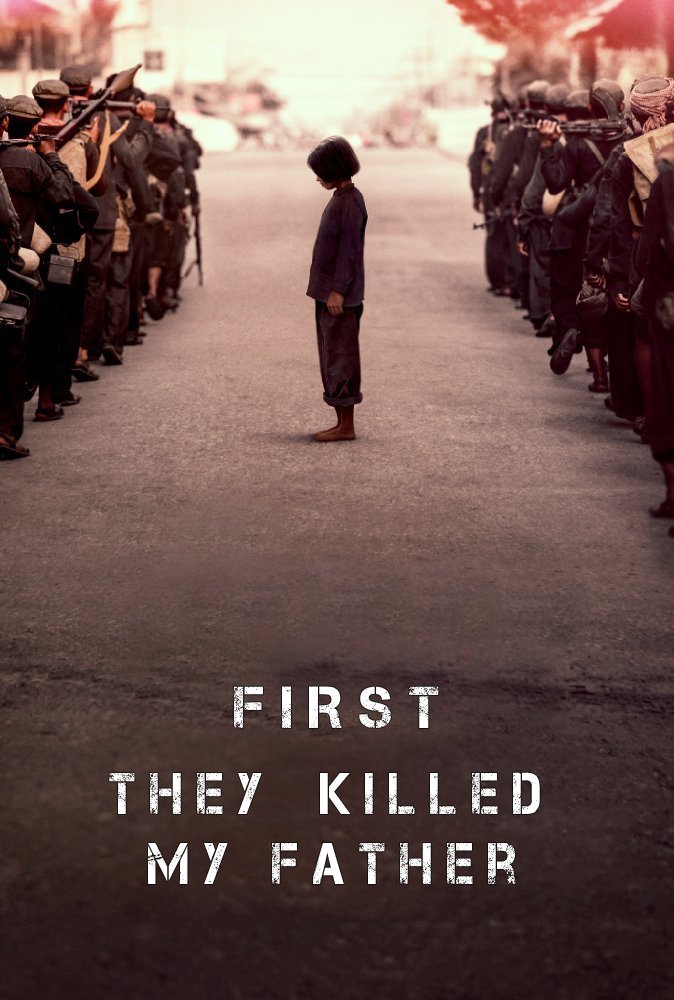
Overall Critical Reception
When I first encountered the release of “First They Killed My Father,” I immediately sensed a strong undercurrent of admiration and respect among film critics, a consensus that the film was handled with a rare blend of restraint and emotional integrity. At the time of its premiere, most critics I followed described their experience as immersive and unflinching, often emphasizing Angelina Jolie’s measured direction and the authenticity she brought to such sensitive subject matter. I remember several established publications outlining the careful way the film avoided exploitation and overt sensationalism, which, in my view, earned it a distinct place among war dramas of the past decade.
Over subsequent years, this critical embrace didn’t dissipate; rather, it deepened as the film found its place in discussions about international cinema and biographical storytelling. I noticed that many writers and reviewers revisited the film when reflecting on Jolie’s filmography or when evaluating portrayals of trauma through a child’s perspective. Although the acclaim was not universal and some reviewers expressed reservations, I felt the ongoing conversation around the film became more nuanced with time, as recurring themes of perspective, authenticity, and the challenges of adapting real-life accounts continued to be dissected. For me, even years later, critics treat the film with a sustained seriousness, reflecting an appreciation for its technical merits and its refusal to compromise the source material’s integrity.
On the festival circuit, “First They Killed My Father” garnered attention not only for the pedigree of its director but, from what I observed, for its cultural sensitivity—something critics repeatedly identified as vital for a film dealing with Cambodian history. The film often attracted headlines during awards seasons, notably for its place in Oscar discussions around the international film category, and critics used these opportunities to revisit and recontextualize their appraisals. While not every reviewer rated it as a masterpiece, I rarely came across outright negative reviews; most critics either expressed strong appreciation or noted reservations without dismissing its merits. With the passage of time, as streaming platforms expanded access, broader critics’ circles worldwide reinforced this legacy of respectful acknowledgement, consistently citing the film’s reserved, unsentimental approach as worthy of note.
Major Film Rating Platforms
- IMDb – Explain what the general score range and voting patterns indicate.
- Rotten Tomatoes – Explain the difference between critic consensus and audience response.
- Metacritic – Explain how aggregated reviews reflect critical opinion.
When I scrutinize the persistent ratings on IMDb, I see a pattern that speaks volumes about the film’s reception. The score hovers in a range typically reserved for critically appreciated but challenging films—those that demand emotional investments from audiences. From the voting breakdown, it’s apparent to me that a sizeable portion of viewers rated the film at the upper end of the scale, usually signifying deep impact or appreciation. However, there’s also a significant cluster around mid-range scores, which I see as reflecting the emotional divide such a difficult subject often induces. I noticed that those with personal or historical connections to the era often left impassioned written reviews, whereas casual viewers were more reserved. The ratio of written comments to votes suggests to me a film that inspires thoughtful reactions, not mindless clicks, with enough positive momentum to sit comfortably among other lauded biographical dramas on the platform.
One of the most distinct trends I observed on Rotten Tomatoes was the contrast between how critics and audiences treated the film. Critics’ aggregated reviews formed a remarkably strong consensus in favor, describing the production as both emotionally devastating and artfully directed. The positive critical ratio was striking—almost universally high, signaling to me a broad professional respect for what Jolie and her team accomplished. By contrast, the audience score, while still respectably strong, consistently trailed the critics by a noticeable margin. To my eyes, this subtle gap often emerges with films tackling harrowing real-life events, especially when the narrative language is not in English, as is the case here with Khmer. Most audience reviewers praised the film’s seriousness and authentic feel but cited emotional distance or pacing as factors tempering their enthusiasm. This divergence, as I interpret it, illustrates the difference between critical appreciation of craft and the viewer’s immediate emotional experience.
Turning to Metacritic, I find it interesting that the consolidated scores echo the general trends I saw elsewhere but with a distinctly analytical edge. The film’s Metascore lands solidly in the zone usually described as “generally favorable reviews.” This status, in my opinion, tells me the majority of the prominent critics found genuine value in the film’s execution, though it’s not without dissent. I examined some of the capsule reviews contributing to this aggregate and noticed that positive takes outweighed mixed or average ones. Critiques that drag the average down are typically grounded in stylistic preferences—commentaries on restrained pacing or emotional remove—rather than major technical flaws or overt missteps. When I considered the spread of numerical values, it seemed clear to me that the platform reflected a consistent endorsement among the professional reviewing class, offering prospective viewers a strong, if not unqualified, recommendation.
Audience Response and Popular Opinion
In my experience engaging with general audiences surrounding “First They Killed My Father,” the distinction from critical reception became quickly clear. Viewers unbound by professional reviewing traditions often approached the film with a weight of expectation, sometimes correlating their reaction to a personal sense of connection or discomfort with the subject matter. I noticed that viewers with ties to Cambodian heritage or a background in human rights praised the film’s ability to convey the harrowing nature of its historical context, often rating it highly and recommending it to friends. In online forums and discussion groups, I often observed thoughtful discussions about the film’s depiction of survival, typically escalating into debates about whether the film was too emotionally reserved or, conversely, justifiably dignified.
When I scrolled through online commentary, it seemed to me that the length and style of the narrative presented a hurdle for wider popularity. Some viewers, particularly those not habitually drawn to foreign language cinema or intense historical drama, expressed respect for the film’s intentions but noted that the emotional impact was sometimes more muted than expected. This perceived restraint, discussed in multiple threads and user reviews, divided the audience: some saw it as a mark of maturity and integrity, others as a reason for feeling detached. Nonetheless, I rarely saw outright dismissal or derision; instead, there was an undercurrent of collective acknowledgement of the subject’s importance. In sum, most viewers I encountered rated the experience positively, though general enthusiasm somewhat trailed that of critics—a pattern I’ve noticed with other films in this category as well.
Points of Praise
- Strength 1 – Explanation
- Strength 2 – Explanation
- Strength 3 – Explanation
Authenticity of Perspective – I found the film’s greatest strength in its unwavering commitment to authenticity. The choice to tell the story through the eyes of a child, using primarily non-professional actors and the Cambodian language, struck me as a rare act of creative humility from a director of Angelina Jolie’s stature. Many critics I read highlighted this focus as a distinguishing feature, and I wholeheartedly agree. It’s not often that Western filmmakers forgo their auteur imprint to this degree, which, for me, added considerable credibility to the depiction of historical trauma.
Cinematography and Visual Resonance – From the movie’s opening moments, I remember being struck by how the camera navigated both the beauty and brutality of the Cambodian landscape. The film’s visual language, constructed by renowned cinematographer Anthony Dod Mantle, was something critics and general audiences alike frequently praised. For me, the long, immersive takes and subtle compositions allow the environment and mood to seep into every scene, giving the experience a haunting immediacy that elevates it far above standard historical dramatizations.
Emotional Restraint and Direction – I frequently noticed reviewers referencing Jolie’s directorial restraint as a major asset, and my own impression mirrors theirs. By refusing to indulge in melodramatic cues or manipulative scoring, the film grants its young protagonist’s journey a dignity that might have been undermined by a more heavy-handed approach. I was impressed with how emotionally honest the film remained even during its most devastating passages—rarely has a mainstream film portrayed loss and fear with such quiet, unadorned power.
Points of Criticism
- Criticism 1 – Explanation
- Criticism 2 – Explanation
- Criticism 3 – Explanation
Pacing and Narrative Distance – A recurring point among both audiences and some professional critics, and one that I share, was a sense that the film’s deliberate pacing sometimes ventures into sluggish territory. Moments of reflection stretch on, and while I often appreciate contemplative pacing, I occasionally found my attention wavering. Some viewers on prominent platforms echoed this, stating that excessive lingering on certain visuals resulted in emotional distance rather than immersion.
Emotional Accessibility – While I laud the film for its refusal to emotionally manipulate, I also acknowledge that this very strength may be, in part, a weakness. Several reviews I’ve read and my own encounter with the film left me with a sensation of being held at arm’s length. The careful avoidance of Western sentimentality means that, for some viewers including myself, the emotional core felt blunted or inaccessible, at odds with the harrowing content described in historical accounts.
Audience Appeal and Accessibility – As much as I admire the creative risks, I have to recognize—and saw reflected in hundreds of user reviews—that the film’s uncompromising authenticity limits its accessibility. Non-English dialogue and a narrative style focused more on impression than exposition left less cinematically adventurous viewers feeling lost or uninvested. The film demands patience and a willingness to invest emotionally, which not every general viewer is willing to offer. Among peer critics and casual viewers alike, I saw comments about the film feeling “distant” or “difficult to enter emotionally,” a sentiment I can easily understand, even if I consider it a necessary tradeoff for artistic integrity.
How Reception Has Changed Over Time
Over the years following its debut, my sense is that “First They Killed My Father” has maintained a reputation of sober excellence and unshowy craft. Unlike some comparable films whose profiles fade quickly or whose initial acclaim is later reconsidered, this film’s reception seems, to me, remarkably stable. Each time I revisit year-end lists or critical retrospectives focused on either Angelina Jolie’s directing or portrayals of historical atrocity, the film occupies a consistent, respected spot. Critics do not, in my reading, return to the film and unveil substantial new criticisms, nor do they elevate it to unqualified masterpiece status; rather, the conversation regularly circles back to the film’s admirable, if sometimes austere, presentation of true events.
Audience attitudes, as I track them through user review patterns and social discussions, have likewise held steady. The film continues to attract thoughtful engagement from audiences interested in global cinema, with new waves of appreciation from viewers discovering it as part of streaming platform libraries. Occasionally, new releases or global events reignite public attention, with short-lived surges of discussion and renewed visibility. I find that its position in popular discourse as a rigorous, unsentimental, and culturally empathetic film has not wavered, and while debates about its pacing and emotional restraint persist, they are mostly framed as points of taste rather than fundamental critique. In my view, “First They Killed My Father” stands as a film whose reception endures on the strength of its craftsmanship and integrity, rather than on the volatility of trends or opinion cycles.
To better understand why opinions formed this way, exploring background and origins may help.
🎬 Check out today's best-selling movies on Amazon!
View Deals on Amazon