
Overall Critical Reception
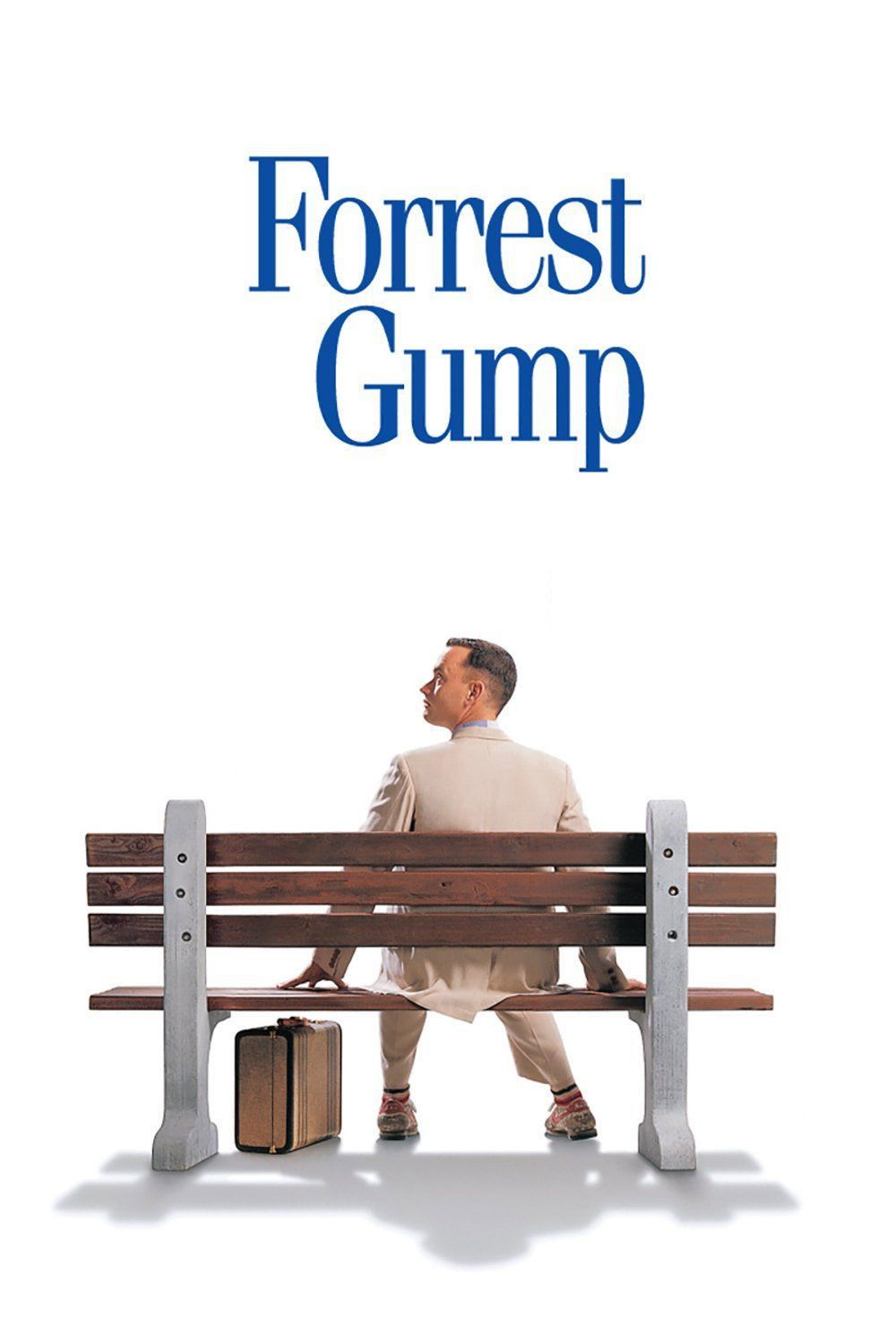
There’s rarely a day I think about American cinema of the 1990s without Forrest Gump floating through my mind—a film that, when it first graced theaters in 1994, struck me as a genuine cultural earthquake. At the time of its release, critics seemed almost as overwhelmed as the viewing public, and their reviews mirrored a collective awe tinged by skepticism. Many voices among professional critics, as I recall, marveled at the film’s technical bravado: the seamless integration of Tom Hanks into archival footage, the vibrancy of the soundtrack that marched through decades of U.S. history, and the earnestness of its storytelling. The reception was peppered with words like “heartwarming” and “ambitious.”
Yet, not every critic joined the chorus of unmitigated praise. Even early on, I noted discussions around the film’s sentimental approach and its particular optimism—the suggestion that this narrative simplicity glossed over the complexities of the historical events it depicted. Some lauded it precisely for its lack of cynicism, seeing in it a balm for a decade defined by irony and skepticism.
Over time, my encounters with retrospective critical essays reminded me that Forrest Gump has become a touchstone for a kind of narrative sincerity that’s both beloved and contested. Many contemporary critics, looking back, continue to admire its craftsmanship and Tom Hanks’ performance, but there’s a stronger note nowadays of ambivalence about its political and social undertones. The film’s Oscar sweep (Best Picture, Director, Actor, among others) is frequently referenced as emblematic of a year when sentimentality triumphed over edgier fare such as Pulp Fiction or The Shawshank Redemption, and this context has colored its critical reputation ever since. I have witnessed its place in the canon become more debated, especially as newer generations of writers reassess what constitutes “best” in cinema. Still, the sheer volume of critical engagement, both positive and negative, is evidence of its enduring impact on the critical landscape.
Major Film Rating Platforms
- IMDb – When I check IMDb’s aggregated score for Forrest Gump, the numbers reveal an extraordinarily broad and sustained adoration from its global user base. The score consistently sits high—among the upper echelon of all-time popular films according to IMDb’s voting algorithms. What jumps out to me is not just the elevated average score but the staggering number of individual ratings, suggesting both a widespread reach and a film that retains relevance across age groups. Over the years, I’ve seen voting patterns hold steady; rarely does the overall rating dip, even as younger users bring new perspectives. This points, in my view, to a film whose emotional resonance and entertainment value has widespread, transgenerational pull.
- Rotten Tomatoes – My impression of Forrest Gump’s Rotten Tomatoes presence is shaped by a distinctly dual response: critics, represented on the Tomatometer, have historically given the film a robust rating, but there’s always a margin—however narrow—between their endorsement and that of the audience. The Audience Score, which regularly hovers at an impressive level, sometimes marginally outpaces the critic average. For me, this subtle gap illustrates two things: viewers often connect more with the film’s emotional storytelling, while critics are sometimes keener to interrogate its stylistic and historical approach. The site’s consensus summary encapsulates this: raves for Hanks’ performance, some reservations about storytelling or emotional manipulation, yet a thumbs-up from most corners. I’ve come to see the Rotten Tomatoes page as a mirror of the ongoing dialogue between gut reaction and intellectual critique.
- Metacritic – My regular checks of Metacritic remind me that its weighted average can reveal underlying critical trends better than a simple mean score. When Forrest Gump receives a score in the upper echelons on this platform, it tracks closely with its contemporaneous acclaim—painted in broad strokes by glowing initial reviews and a near-universal chorus of praise for Hanks. Yet, over the years, as Metacritic has collected more reviews, I’ve noticed incremental movement towards the center: some later critics voice concerns about its narrative choices, and the platform’s color-coded system often balances green with a subtle caution about “masterpiece” status. My impression is that even with this nuance, the aggregate leans in favor of the film, suggesting a consensus that, at worst, Forrest Gump is a well-crafted cinematic achievement and, at best, an unforgettable American classic.
Audience Response and Popular Opinion
Whenever I bring up Forrest Gump in conversations with moviegoers—whether lifelong cinephiles or casual viewers—I notice a kind of reverent nostalgia. Audiences, then and now, tend to respond with a warmth that transcends generational gaps. I’ve witnessed a cross-section of friends and acquaintances recall where they first saw it, how certain lines (“Life is like a box of chocolates”) became woven into popular vernacular, or how the music and images evoke personal memories. From the earliest screenings, I remember packed theaters reacting with laughter, tears, and, in many cases, applause. Among the general public, enthusiasm for the film nearly always outpaces critical skepticism. It’s common, in my experience, for even those who rarely frequent cinemas to count Forrest Gump among their all-time favorites.
What fascinates me is how this wide embrace often persists even when viewers acknowledge the film’s narrative simplicity or stylized version of history; their connection is less about specific events and more about emotional impact. The film lingers in family living rooms, is revisited on cable marathons, and often emerges as a staple of generational bonding. I’ve noticed that, for many, it stands as a comfort film—an experience people willingly rewatch, recite, and recommend. Social media trends, fan pages, and quotable moments have only cemented its longevity. In short, my encounters with audience reaction suggest an almost universal fondness, with public opinion frequently falling on the side of affection, even as critical circles develop more nuanced views over time.
Points of Praise
- Tom Hanks’ Performance – In my view, the single most celebrated aspect of Forrest Gump is Tom Hanks’ embodiment of the title character. My own admiration for his work is echoed by just about every critic and audience member I’ve encountered. Reviews from the 1990s right up through today single out his uncanny ability to fuse earnestness, naïveté, and understated intelligence in a way that feels authentic and deeply moving. Watching Hanks, I felt the character transcend caricature—he became someone I could root for, someone who inspired empathy regardless of the fantastical turns the plot takes. This is one of those rare performances that not only defines a film but also shapes an actor’s entire career trajectory for decades to come.
- Production and Technical Innovation – One reason I’m continually impressed by repeated viewings lies in the film’s technical innovations. At the intersection of historical spectacle and seamless visual effects, Forrest Gump still impresses me with clever digital insertions: the blending of Hanks into real archival footage, the believable aging effects, and the choreography of its sprawling timeline. Critics and fans alike often point to this seamless integration as a benchmark for 1990s special effects—balancing spectacle with subtlety. Even in an era saturated with CGI, the film’s technical achievements still feel groundbreaking to my eyes, partly because they serve the story rather than overwhelming it.
- Soundtrack and Atmosphere – I can’t think of many films that bottle the feeling of several decades as intuitively as Forrest Gump. The period-appropriate soundtrack, including everything from 1960s rock to 1970s protest anthems and beyond, hits me with a visceral nostalgia, regardless of whether I lived through the era. Reviews frequently cited the music as a highlight, and I share that sentiment: it’s not merely background, but a narrative device that shapes mood and anchors each time period. For many critics I’ve read, as for me, the emotional atmosphere owes as much to these carefully chosen tracks as to any line of dialogue or scene of spectacle.
Points of Criticism
- Sentimentality and Narrative Simplicity – Among the chorus of praise, I’ve always detected a current of dissatisfaction with the film’s overt sentimentality. Time and again, I’ve read reviews and essays that accuse the film of leaning too heavily on feel-good storytelling, sometimes at the expense of provoking deeper thought. Personally, I sometimes feel this too; on some viewings the emotional cues seem overdrawn, as if the narrative were steering me toward catharsis rather than letting moments land naturally. Critics past and present have, in my reading, often cited this as a weakness, comparing its approach unfavorably with more complex or ambiguous contemporaries.
- Handling of History and Politics – I notice a recurring theme: Forrest Gump’s treatment of American history is polarizing. On one hand, I admire the skill with which the film weaves real events into its fabric; on the other, I see why some observers are uneasy with its selective storytelling. Certain critics have gone so far as to suggest the film offers a reductive, sanitized view of turbulent decades. My own view aligns with this critique to some extent—sometimes, I find myself wishing for a more nuanced presentation. The film’s apolitical stance, while endearing to some, leaves others wanting a deeper, more probing engagement with its backdrop of war, civil rights struggles, and social upheaval.
- Character Development Beyond the Protagonist – While Forrest is indelibly sketched, I’ve always felt secondary characters don’t receive the same depth or dimension. Critical essays sometimes point to these supporting figures—Jenny, in particular—as conduits for the protagonist’s journey rather than as fully realized individuals. In my experience, these figures embody ideas more than genuine complexity, which can detract from the film’s emotional stakes. For every moving scene between Forrest and Jenny or his mother, I find myself wishing I knew them as intimately as I know Forrest. This uneven character development is a common refrain in the critical reception I’ve absorbed over the years.
How Reception Has Changed Over Time
Looking back over the past three decades, I’m struck by how Forrest Gump’s cultural and critical reputation has evolved. In my early memories, the film was lauded almost universally—a juggernaut at the box office, a darling at the Academy Awards, and a fixture in nearly every “Best of the ’90s” roundup. The general tone, both in reviews and casual discussion, hovered near reverence. Over time, however, critical discussion has grown more layered. Retrospective essays, think pieces, and new-generation critics have revisited the film with different eyes: some upholding its status as an iconic work, others raising sharper critiques of its message and artistic choices.
Despite these shifting perspectives in the critical sphere, I notice that the broader public affection has proven remarkably resilient. While new discourse interrogates its storytelling and cultural significance, its popularity with general audiences—if anything—seems to have grown. I routinely encounter young viewers discovering the film for the first time, thoroughly embracing its quirks and emotional arcs. Anniversary screenings still sell out, quote-alongs proliferate, and digital platforms keep it in circulation. Its references continue to surface in contemporary pop culture—from memes to sitcom jokes. To my mind, this enduring resonance signals a film that, regardless of critical waves, has transcended its era and embedded itself in popular consciousness. The result is a reputation that, though more complex today, remains fundamentally positive: a cherished classic, albeit one subject to the same scrutiny as any beloved cultural artifact with a decades-spanning legacy.
To better understand why opinions formed this way, exploring background and origins may help.
🎬 Check out today's best-selling movies on Amazon!
View Deals on Amazon