
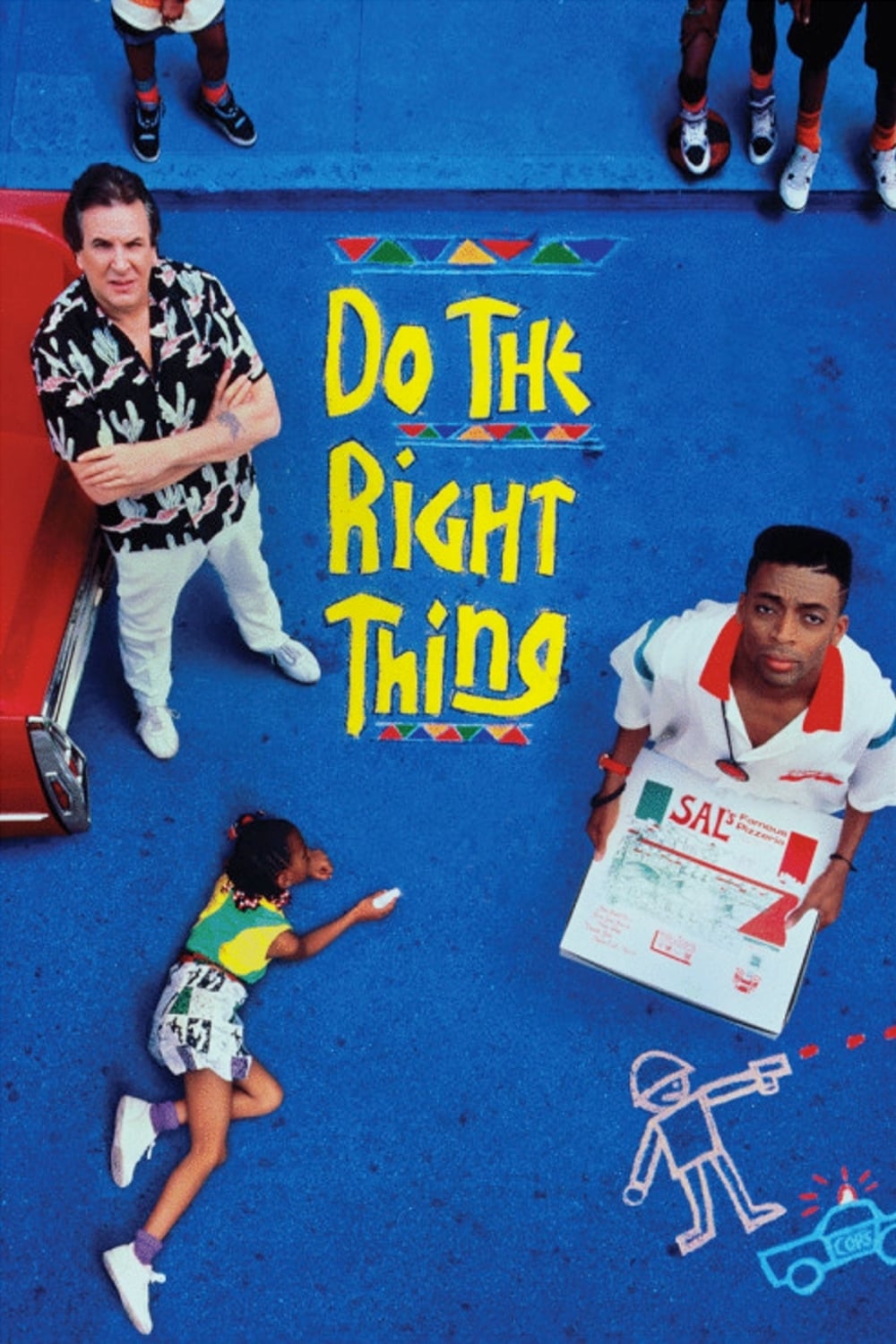
Overall Critical Reception
Whenever I revisit the stormy summer streets of Bed-Stuy as crafted by Spike Lee, I’m immediately reminded of how raw, confrontational, and viscerally alive the critical response was to “Do the Right Thing” when it first premiered in 1989. Back then, I sensed a palpable charge in the air—critics seemed both exhilarated and a little unnerved. There was a recognition that something incendiary had arrived: a film that refused to fit the neat, comfortable molds American cinema so often constructs for itself. Critics at major publications, from The New York Times to the Los Angeles Times and beyond, seized on its immediacy and energy. Even as they lauded Lee’s boldness, I recall reading reviews where hesitancy drifted in. Some questioned whether its tinderbox subject matter might spark unrest, while others read the film as a sort of necessary social provocation—a mirror held up to America’s racial divide.
Yet, as years have passed and retrospectives have multiplied, my impression is that the unease that greeted its release has mellowed into overwhelming consensus about its significance. With each anniversary, more critics have highlighted what I see as Lee’s technical audacity and the urgency of the questions he posed, rather than the perceived dangers of the film’s confrontations. I often come across critics revisiting their initial reviews, sometimes admitting that their first readings underplayed the film’s craft or misunderstood the intent behind its provocations. In best-of lists, from outlets both mainstream and academic, I’ve noticed that its critical stock only continues to rise, often cited now as a watershed achievement in American filmmaking.
Major Film Rating Platforms
- IMDb – As someone who pores over rating trends and user demographics, I’ve always found IMDb’s aggregated score for “Do the Right Thing” telling. The film’s rating, as reflected by tens if not hundreds of thousands of individual votes over decades, sits within the upper echelons of the platform’s user rankings. What stands out to me is the fairly tight clustering of those scores—most ratings trending toward the upper end of the spectrum, with relatively fewer in the extremely low range. That pattern suggests to me a substantial level of respect, even among casual viewers unlikely to be swayed by critical hype. I do, however, observe periodic spikes in user voting that correspond to real-world events or anniversaries, hinting that public engagement with the film ebbs and flows over time, often renewing its relevance. A noticeable minority periodically rates it lower, echoing, I believe, the ongoing divisiveness of its subject matter even decades after release.
- Rotten Tomatoes – Examining Rotten Tomatoes, I always see a telling split with this film, but not the sort that’s common with controversial or genre works. For “Do the Right Thing,” professional critics—both contemporary and modern—consistently elevate the film to the platform’s highest rungs. Their consensus leans almost universally positive, and the written excerpts routinely praise the film’s direction, script, and ensemble performances. By contrast, the audience score, while robust, sits somewhat lower on average, indicating to me both deep appreciation and an undercurrent of divisiveness. When I look closer at user comments, it strikes me that many express strong emotional responses—some praise the audacity and honesty; others seem challenged or discomforted, leading to more polarized personal ratings. The critical-audience score gap, though not gaping, reveals a subtle tension between professional assessment and mass viewer reception.
- Metacritic – Metacritic synthesizes critical opinion into composite scores, and in my reviewing of “Do the Right Thing” on this platform, I find the result to be exceptionally high, even compared to many celebrated peer films. The aggregate single-number rating based on published critical reviews signals near-unanimous acknowledgment of artistic achievement. I note that the critical reviews compiled—even those that might initially have been reserved—tend to be weighted by Metacritic’s algorithm to reflect their long-term influence. As a result, “Do the Right Thing” consistently stays in that highest tier, indicating to me that critical respect has never really eroded but rather strengthened over time. The few outlier reviews, averaging out the score, appear minimal in their impact given the breadth of staunchly positive responses.
Audience Response and Popular Opinion
Whenever I talk to viewers outside the critical bubble—or read through wide-ranging user reactions online—I notice a compelling divide. My sense is that while critics treat the film as a landmark and often champion it as essential American cinema, general audiences are more varied in their response. There’s a loyal core of viewers who’ve embraced the film fully, often ranking it among their personal favorites and citing its relevance as unflagging, even decades out. They echo the critical talking points about direction, acting, and technical prowess, but also connect on a gut level to the film’s tensions and heightened reality—which, to me, seems testament both to Lee’s storytelling and to the immediate, nerve-touching nature of the subject matter.
That being said, I regularly see a segment of the audience for whom the film’s aggressive confronting of social conflict prompts discomfort or resistance. Some seem to interpret its refusal to offer easy answers as a flaw, and occasionally express frustration with aspects like ambiguity or emotionally provocative scenes. In social contexts, I’ve encountered viewers who admire the craft but are divided over specific characters’ actions or question the final choices depicted onscreen. For every enthusiastic endorsement, there also exist hesitant, conflicted, or outright critical voices—yet, this very polarization feels to me like a symptom of the film’s broad cultural impact. Its power to spark conversation and disagreement persists, making it one of those rare films whose reception is as much a living debate as a settled verdict. To me, this ongoing audience contention enhances, rather than detracts from, its legacy.
Points of Praise
-
Strength 1 – Technical and Directorial Innovation
What always leaps out at me is Spike Lee’s masterly control over the film’s technical palette. Critics and seasoned filmgoers alike have long pointed to his innovative use of color, the fluid camera movements, the bold compositions, and the interplay between sound and silence. For me, the cinematography by Ernest Dickerson imbues every street corner, stoop, and window with a tangible, sunbaked tension, enhancing the simmering mood of the film’s hottest day. Lee’s choices—the canted angles, the saturated reds and yellows, and the kinetic steadicam shots—don’t just show Bed-Stuy; they force me, as a viewer, to feel its pulse and pressure. This technical bravado is persistently singled out in positive reviews, establishing the film as a model of creative direction. -
Strength 2 – Ensemble Cast Performances
I can’t overstate the role that the cast plays in anchoring the film’s reputation. Nearly every retrospective or contemporary review I survey emphasizes the outstanding ensemble—an array of performances that feel lived-in and specific, never reduced to mere archetype. For me, performances by Danny Aiello, Ossie Davis, Ruby Dee, and Lee himself as Mookie stand out for their authenticity and complexity. The actors’ ability to render even brief exchanges memorable is, in my assessment, a central reason the film resonates so powerfully. Critics have routinely celebrated the collective energy and individuality that each performer brings, often describing the ensemble as one of the definitive strengths of not just this film, but of American movies in the late twentieth century. -
Strength 3 – Cultural and Social Resonance
It’s impossible for me to separate the film from the context in which it was made—and from the social reverberations it continues to cause. I consistently observe that critics, audiences, and filmmakers reference “Do the Right Thing” when discussing American race relations and urban life, a testament to its resonance far beyond the medium. That a single work can become a touchstone in discussions of politics and culture speaks to the depth and clarity with which Lee depicts his world. When I consider praise for this aspect, it’s usually not abstract: writers and viewers cite specific moments and lines that entered the larger lexicon. The ongoing relevance, judging from the countless think-pieces and anniversary articles, never seems to diminish, highlighting that it hasn’t lost an ounce of potency.
Points of Criticism
-
Criticism 1 – Perceived Ambiguity and Open-Endedness
From the first time I watched and discussed the film, I became aware of a recurrent criticism: its refusal to provide a clear moral stance or explicit solution. I’ve heard this voiced by both professional reviewers and everyday viewers, particularly those who gravitate toward movies with tidy resolutions. For some, the deliberate ambiguity—most dramatically present in the climax and denouement—can feel frustrating or unsatisfying. I find that this reaction is usually more pronounced among viewers who prefer certainty from their storytelling, whereas others find the open-endedness a strength. Still, in both social and critical circles, this characteristic has generated perennial debate and even outright disapproval in certain reviews. -
Criticism 2 – Polarizing Portrayals and Characterizations
When reading and listening to critiques of “Do the Right Thing,” I frequently encounter concern over how characters are depicted, particularly in terms of their motivations and morality. Some commentators question whether certain individuals or groups are drawn with sufficient nuance, leading, they argue, to either oversimplification or the risk of misinterpretation. I’ve seen some reviewers accuse the film of stoking division or falling prey to caricature, which, for them, detracts from the film’s otherwise rich fabric. This was especially pronounced, I recall, in initial reviews from 1989 and remains a periodic talking point in audience forums. -
Criticism 3 – Emotional Intensity and Discomfort
Not every viewer, in my experience, walks away from “Do the Right Thing” comfortable or even appreciative of its high-intensity emotional register. I’ve found that, for some, the sense of escalating tension feels excessive or even overwhelming, causing them to disengage rather than reflect. There are those who cite the film’s anxiety-inducing pace, confrontational dialogue, and relentless escalation as just too much, tipping the experience toward the unpleasant. This remains a dividing line, particularly among viewers less accustomed to cinema designed to provoke and unsettle rather than comfort or entertain.
How Reception Has Changed Over Time
If I trace the film’s footprint from its electrifying debut to its present-day stature, the transformation in its critical and popular reputation is one of the more remarkable evolutions I’ve witnessed in American cinema. Initially, conversations around the film were as much about its supposed dangers—whether it might incite real-world unrest—as about its artistic achievement. In my reading of period coverage, there’s often a wary admiration: recognition of importance, but clouded by fear and controversy. As the years have rolled on, however, these anxieties have largely dissipated; discussions now focus on how “Do the Right Thing” anticipated, chronicled, and humanized longstanding divisions.
Each major retrospective, decade celebration, or resurgence in viewership (often coinciding with contemporary social upheavals) reaffirms for me the film’s durability and continued relevance. I see it consistently reappraised—by critics, filmmakers, and new generations of viewers—not only as a product of its era but as a prescient and alive work, still urgent in the present day. Far from fading into a historical footnote, it has only burnished its stature, moving from contentious flashpoint to canonical classic. Looking at current ratings and all-time-best lists, I don’t see evidence of decline in reputation; if anything, the film enjoys a wider appreciation and understanding now than ever before. Its capacity to compel re-examination keeps the film’s reception a dynamic and vital phenomenon, one that seems destined to persist well beyond its initial moment.
To go beyond scores and understand what shaped these reactions, background and interpretation can help.
🎬 Check out today's best-selling movies on Amazon!
View Deals on Amazon