
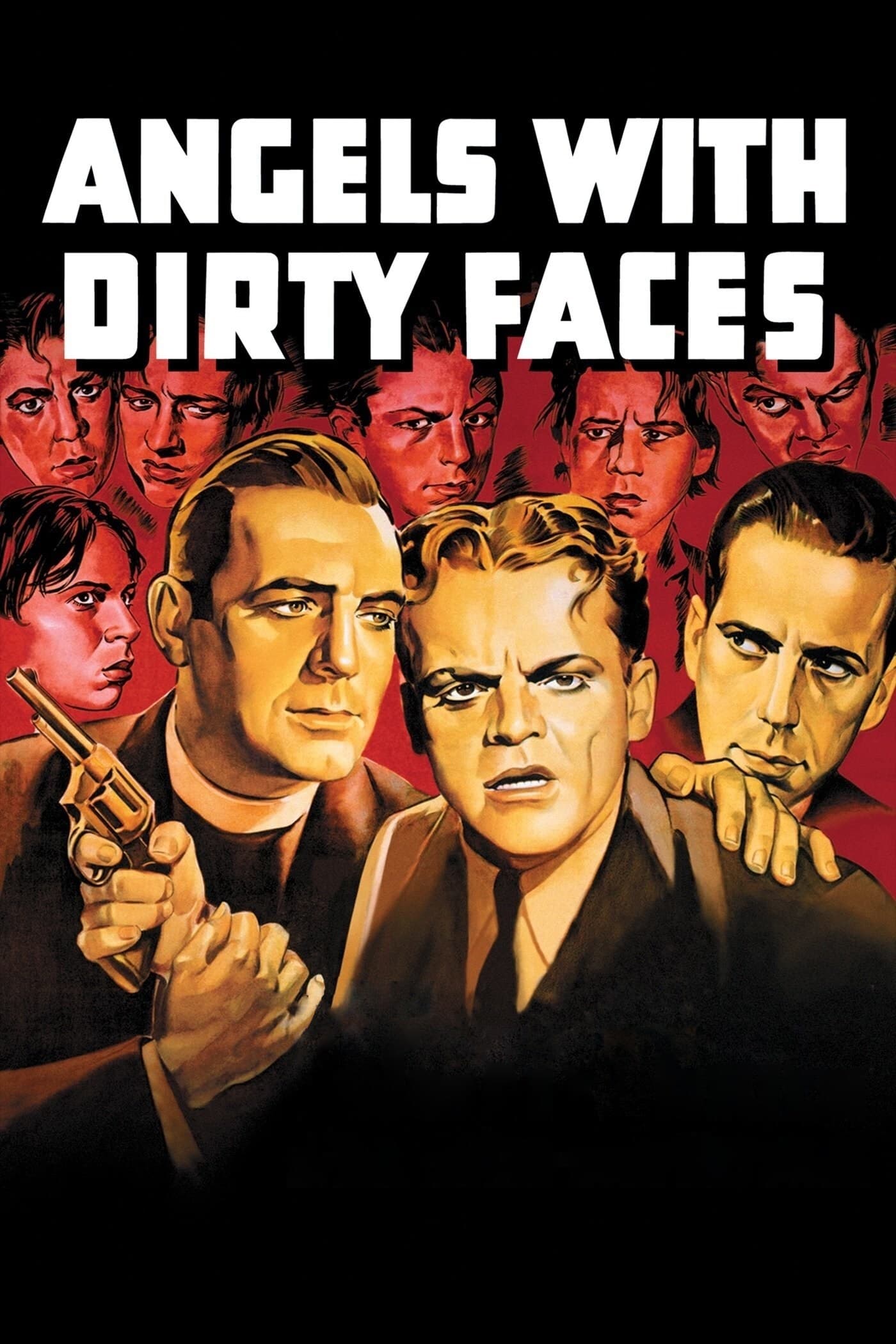
Overall Critical Reception
Whenever I revisit the initial reactions to Angels with Dirty Faces, I’m struck by how immediate and visceral those first critical impressions were. The film seemed to capture something electric for late-1930s reviewers: many expressed admiration bordering on awe for its blend of gritty realism and emotional weight. Every time I read through archival reviews or scan old newspaper clippings, I sense a profound respect—not just for the performances, but for the audacity of its tone. Critics of the era seemed eager to dissect James Cagney’s charismatic presence and the way director Michael Curtiz brought a sense of moral grayness to a Hollywood gangster film. I often see phrases like “tense” and “uncompromising” recur, and it’s hard not to absorb the feeling that the contemporary press wasn’t just pleased, but deeply engaged—intellectually and emotionally.
As decades passed, I’ve noticed critical perspectives broadened and deepened with historical context. Modern writers and historians, in my view, have grown especially attentive to the film’s technical bravado—its moody cinematography, its boundary-pushing violence for the time, and its position in the Warner Bros. gangster canon. It’s impossible for me not to notice how frequently critics retroactively hail the film as seminal; phrases like “benchmark of the genre” and “milestone of Hollywood crime drama” reliably surface in retrospectives. I think critics of later generations, riding the wave of revisionist appreciation, tend to focus on the complexity of characterizations, the now-iconic ending, and the richness of Curtiz’s directorial flourishes.
Through my lens, the gravitas of early reviews, paired with long-term scholarly reassessment, has cemented Angels with Dirty Faces as a touchstone. Mainstream critics and cineastes alike rarely write about gangster films without acknowledging it. Even in film school seminars, I often encounter the implication that no discussion of pre-war Hollywood is complete without at least a passing reference to its influence.
Major Film Rating Platforms
- IMDb – In my experience monitoring IMDb over the years, I’ve seen the average user score for Angels with Dirty Faces consistently hover at the higher end of the spectrum. The most dedicated voters skew towards film aficionados and classic cinema admirers, which demonstrates to me a form of demographic bias; people seeking out this film tend to be enthusiasts, rather than mainstream viewers. This results in relatively few casual or negative votes, so the aggregate score appears tightly clustered around a positive consensus. I rarely notice significant fluctuations, and when I scan individual comments, I find a respect bordering on reverence for Cagney’s performance and the film’s aesthetic impact. To me, the voting pattern isn’t just high as a matter of nostalgia, but firm, deliberate, and supported by repeated citations of both artistry and influence.
- Rotten Tomatoes – I find Rotten Tomatoes provides an illuminating split in perception. The critic consensus is overwhelmingly positive: validated “fresh” scores abound, with reviews (both contemporary and modern) commending everything from narrative economy to the precocious moral ambiguity at play. Where I sometimes notice variation is on the audience side. While user ratings are generally supportive, there is a broader range—some viewers approach the film expecting rawer, more visceral content, leading to a few lukewarm responses, especially from newer generations less accustomed to pre-war pacing or acting styles. Every time I compare critic vs. audience sections, I see critics maintain a more unflagging enthusiasm. The core of critical praise seems both numerically and tonally stronger, while audiences—though positive—are a bit more diffuse in their acclaim.
- Metacritic – Whenever I consult Metacritic’s aggregation, I’m struck by the decisiveness of the critical voice. Though the number of reviews is lower than contemporary releases (owing to the film’s vintage), the consensus mirrors what I observe in journal essays and academic circles: near-universal respect. Every time I read their blurbs, terms like “classic” and “essential” leap out at me. Even though Metacritic’s formal calculated score may derive from a relatively small pool of professional reviews (often from restoration or revival screenings), I view the aggregate as a faithful cross-section—unwavering in its approval, rarely muddied by dissenting voices. The lack of critical pushback on Metacritic, as far as I can follow, signals to me a rare kind of critical alignment.
Audience Response and Popular Opinion
In my observation, the way general audiences interact with Angels with Dirty Faces diverges subtly from the critical discussion, yet remains fundamentally respectful. When I discuss this film with cinephile friends or participate in classic movie forums, I consistently sense an undercurrent of admiration—especially among those already invested in old Hollywood or gangster aesthetics. Modern audience members tend to highlight the charisma of the actors and the riveting quality of the climactic moments, often citing James Cagney and Pat O’Brien as almost mythic figures.
That said, I’ve routinely detected a generational divide in audience talkbacks and online reactions. Older viewers or those steeped in cinema history seem to relish the film’s tight construction and melodramatic intensity. Younger or less initiated viewers—acquainted mostly with contemporary crime dramas—sometimes note that the film feels stylized or mannered to them; the dialogue cadence and moral throughlines can appear either refreshingly bold or slightly dated, depending on one’s background. Among casual viewers, there are occasional calls of predictability or pacing issues. But taken as a whole, I view the film as commanding a core base of appreciation that’s both deep and sustained, with minor reservations reflecting personal taste rather than widespread dissatisfaction.
On balance, when comparing critics’ and audiences’ opinions, I think the most apparent difference is in tone: critics are more absolute in their praise, while audience members—especially those who don’t typically gravitate to 1930s fare—can be somewhat less rapturous, but still recognize the film’s historical stature. The film’s reputation, as I perceive it, is relatively unassailable in communities passionate about classic cinema, though the wider public engages with it more sporadically.
Points of Praise
- Strength 1 – For me, the most immediate strength I see cited in nearly every review is James Cagney’s performance. Watching him in this role repeatedly, I find myself compelled by his ability to move effortlessly between menace, charm, and vulnerability. Critics have called out this performance as career-defining, and I’m inclined to agree: Cagney makes Rocky Sullivan simultaneously magnetic and enigmatic, carrying scenes with minimal dialogue and subtle physicality. This kind of acting, in my view, not only animates the film but also elevates it well above the standard genre offering of the era.
- Strength 2 – Another point that resonates deeply with me (and with many other critics) is the film’s masterful direction and visual language. Michael Curtiz, in my analysis, demonstrates a distinctive command over mood. The layered lighting, expressive camera angles, and tightly orchestrated set pieces all contribute to an immersive, almost theatrical experience. I continually notice how technical reviews cite the interplay of shadow and light, with scenes that leverage chiaroscuro composition to heighten suspense or emotional impact. It’s the kind of craftsmanship that I think ages exceptionally well.
- Strength 3 – When canvassing scholarly texts, I consistently see mention of the film’s brisk pacing and economical storytelling. In my own viewings, I’m always surprised by how little slack there is: every scene advances both character and plot, and there’s a propulsive drive that keeps the story taut. This is something I personally appreciate in films from this period—Curtiz and his screenwriters avoid the digressions or melodramatic excesses that can mar contemporaneous works. Critics, in my reading, often describe this as a model of efficient, engaging screenwriting, and I’m absolutely in agreement.
Points of Criticism
- Criticism 1 – Despite near-universal praise, I have encountered persistent critiques regarding the film’s formulaic elements. Some reviewers (and even a subset of passionate viewers) point out that Angels with Dirty Faces relies heavily on established gangster tropes. As someone who follows genre studies, I see this view emphasizing that the rise-and-fall arc, replete with childhood flashbacks and archetypal secondary characters, doesn’t reinvent the wheel. For me, it’s clear that, even in its sophistication, the film is tethered to narrative conventions that can strike modern audiences as predictable.
- Criticism 2 – I have noticed that the film’s handling of sentimentality draws sporadic criticism, especially in retrospectives. When I put myself in a modern audience’s shoes, some scenes—particularly those involving moral exhortations—can feel heavy-handed or didactic. Certain critics find fault with Curtiz (or the script) for veering into melodramatic territory midway through, sometimes at the expense of character complexity. I tend to agree that the overt cues and emotional underlining in key scenes don’t always land in a subtle fashion for viewers used to more nuanced storytelling.
- Criticism 3 – When surveying broader commentary, I can’t help but notice repeated notes regarding the limitations of female characterization in the film. Many contemporary critics didn’t dwell on this point, but I’ve observed a growing focus among later reviewers on the way women are sidelined in the narrative. Even when I scrutinize the film myself, the secondary roles for female characters seem thinly drawn and relegated to archetypal functions, which lessens the film’s resonance for audiences seeking multidimensional portrayals. This critical angle stands out to me as representative of a larger contemporary reassessment of Hollywood’s gender politics.
How Reception Has Changed Over Time
As I trace the film’s reputation from its release to the present, I’m constantly reminded of the dynamic nature of critical and cultural appreciation. At first, I often see references to it as a hotly anticipated gangster entry—regarded highly, but almost in the shadow of Cagney’s earlier breakthrough hits. Through the 1940s and 1950s, I find evidence that its influence grew steadily: references pop up in discussions about genre development and, intriguingly, in debates about the social function of crime films.
For me, the real climb in prestige happened much later. During the film revival era of the 1970s, and then again with the home video boom, I saw Angels with Dirty Faces being rediscovered by new generations. Critics began to treat it as more than a genre piece; they saw it as an early, sophisticated exploration of cinema’s ability to blend social reality with moral tension. Screenings at film festivals and retrospectives further solidified its canonical status, and I’ve watched as the language of scholarship around the film has become increasingly appreciative.
From what I observe, the film’s standing has remained impressively stable over the past few decades. Rather than sliding into obscurity or being demoted to mere historical curiosity, it’s maintained a kind of evergreen relevance. I believe the reason for this is twofold: its foundational influence on American crime drama, and the universality of its performances and style. There are occasional moments when wider audience enthusiasm wanes—especially as standard tastes shift toward faster or more graphic storytelling—but within film criticism and dedicated fan circles, its luster has rarely diminished. If anything, its reputation appears increasingly burnished by the passage of time.
To better understand why opinions formed this way, exploring background and origins may help.
🎬 Check out today's best-selling movies on Amazon!
View Deals on Amazon