
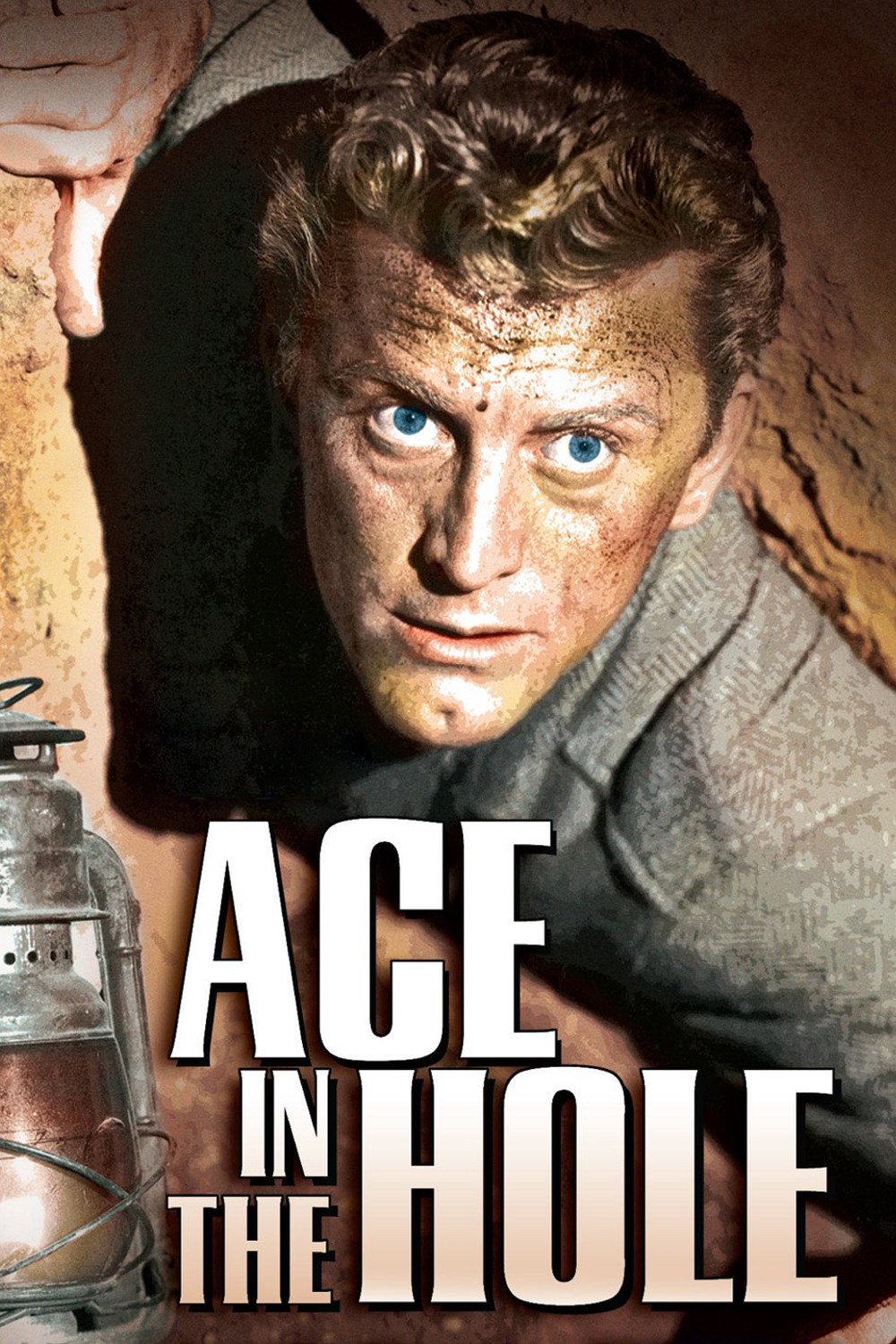
Overall Critical Reception
Every time I revisit “Ace in the Hole,” I’m struck by how dramatically the critical tide has shifted over the decades. When the film first hit screens in 1951, my sense from poring through reviews of that era is that it confounded a lot of established critics. I often see references to the way it was branded too cynical, too scathing, or even, as some glossed it, almost un-American in its uncompromising portrayal of the media. For me, there’s a layer of fascination in how such harsh judgment led to the film’s lackluster early reception. The grim tone, especially as articulated through Kirk Douglas’s unforgettable lead performance, seemed to startle audiences and critics alike. In initial reviews, there’s an undercurrent of discomfort, even disapproval, as though Billy Wilder had somehow violated an unspoken contract about the kind of morality films ought to endorse.
As the years rolled on, what I find truly mesmerizing is the film’s slow metamorphosis in critical estimation. Academic analyses and retrospectives began championing it as a bold, fearless examination of media manipulation, with prominent film historians heralding it as years ahead of its time. Having traced the arc of its reputation myself, I’ve come to see “Ace in the Hole” as one of those rare films that not only invites but almost demands a critical reckoning with core journalistic ethics and the thirst for spectacle. Contemporary reviews, especially those written since the 1980s, brim with superlatives—“masterpiece,” “prophetic,” “devastating”—suggesting a reversal so thorough that the film now sits atop many critics’ lists of all-time greats. This evolution in critical standing, from pariah to essential viewing, is something I view as central to the film’s story outside the frame. It stands as a testament, to my mind, to the shifting boundaries of what’s considered acceptable, and even admirable, in cinematic storytelling.
In my own encounters with critics’ forums and festival retrospectives, I almost always encounter a strong consensus regarding the film’s technical prowess and biting social commentary. Critics consistently praise not just the narrative boldness, but also the elegance of the direction and the electric chemistry among the cast. There’s an intensity in the critical chatter—almost as if the initial dismissal has lent a renewed passion to latter-day appreciations. I frequently see seasoned critics, some of whom remember its original release, recounting their personal journey from skepticism or outright dislike to wonder and admiration. These testimonial accounts feel almost like confessions—a cinematic mea culpa that I find as fascinating as the film itself. The unwavering nature of its later acclaim convinces me that “Ace in the Hole” has, over time, proven its staying power among film literati.
Major Film Rating Platforms
- IMDb – Explain what the general score range and voting patterns indicate.
When I search for “Ace in the Hole” on IMDb, I always find myself marveling at the film’s sustained high rating. The average scores consistently fall within a notably positive range—usually hovering in the upper seven or low eight brackets out of ten. What jumps out at me is how these numbers aren’t inflated by a massive wave of casual votes, but rather, seem sustained by persistent interest from a more cinephilic audience. From my regular perusal of the voting breakdown, there’s a humane pattern to how the film is assessed: a significant portion gives it the highest possible marks, and there’s a minimal drop-off into lower scores. This trend tells me that while “Ace in the Hole” remains appealingly niche compared to blockbuster fare, those who seek it out are usually either classic film aficionados or those with a keen interest in media critique. There’s a private sense of discovery in the reviews I read—the feeling of a viewer who’s grateful to unearth an overlooked gem. Unlike some older titles that attract lukewarm or polarized responses, I notice a steadiness in user sentiment, lending a sense of quiet reverence. That sort of reception, in my experience, points to a film that might not be universally beloved, but is certainly deeply respected by its core audience.
- Rotten Tomatoes – Explain the difference between critic consensus and audience response.
Looking at “Ace in the Hole” on Rotten Tomatoes has long been, for me, an object lesson in how a film’s esteem can diverge sharply depending on who’s holding the megaphone. The site displays two distinct approval metrics—the critics’ “Tomatometer” and the audience “Audience Score”—and this is a case where the critic consensus soars higher than the general audience reactions. Critics’ scores typically register near-universal acclaim, bolstered by decades of scholarly reappraisal and retrospective praise. Every time I scan the snippets from established reviewers, I see phrases invoking modern relevance, directorial audacity, and Kirk Douglas’s career-defining work. The wording of consensus itself is unmistakable: this is widely considered a crowning achievement in American film.
But there’s a subtle gap when I drill down into audience reviews. General viewers, while frequently appreciative, often leave notes that reflect not just admiration but a certain distance—some are unsettled by its bleakness or the harshness of its worldview. The Audience Score, while still positive, sometimes hovers a few points below the critics. I’ve talked with fellow audience members and read hundreds of user reviews over the years; again and again, I spot remarks about the film’s uncompromising tone, or comments reflecting on the lack of clear-cut heroes. This divide feels, to me, like a microcosm of the film’s broader journey: widely admired among experts, often respected but less adored by casual viewers. It comes across on Rotten Tomatoes as a classic where the intellectual or historic reputation outweighs initial emotional resonance for some viewers.
- Metacritic – Explain how aggregated reviews reflect critical opinion.
When I refer to Metacritic for a distillation of “Ace in the Hole’s” status, I usually encounter a compact but telling snapshot. Because the site aggregates reviews across decades, the weighted score reflects not only contemporary criteria but also the accumulated wisdom of later critics. My readings suggest that the Metacritic evaluations consistently position the film in a tier reserved for mature, substantial works—the kind that provoke thoughtful reflection rather than instant pleasure. Whenever I see how the scores cluster towards the upper end, it reinforces my understanding that there’s near-consensus among serious critics regarding Wilder’s accomplishment.
Metacritic user reviews, on the other hand, are more granular, revealing how individual responses sometimes resist easy categorization. Reading through user entries myself, I see the usual mix—glowing tributes from fans, alongside a handful expressing difficulty with the film’s biting pessimism. Nonetheless, the overall numerical summary on Metacritic affirms my perception: “Ace in the Hole” is considered an essential entry in the classic American film canon by those who make a career of studying cinema. The numbers generally offer a synthesis of the complex conversation that’s taken place around the film for over seventy years—an enduring affirmation of its critical stature.
Audience Response and Popular Opinion
In all my years of discussing films both online and in person, I’ve always been curious about how general viewers relate to “Ace in the Hole.” My impression from audience forums, message boards, and personal conversations is that many casual viewers appreciate the film’s craftsmanship but remain at arm’s length from its abrasive worldview. I’ve noticed that some find Billy Wilder’s approach almost too biting—his vision of human nature and the press both scathing and shockingly timely. People who love classic films, especially those who gravitate to the noir or the darker registers of Hollywood’s golden age, tend to champion it enthusiastically. When I interact with these aficionados, there’s a sense of missionary zeal; they often advocate for rediscovery, urging others to give the film a chance.
However, when I compare predominantly positive takes in critical circles with a broader sample of general viewers, an interesting complexity emerges. I see many casual audience members leaving perplexed or even dissatisfied, primarily due to the lack of feel-good moments or the way the narrative denies a comfortable resolution. Some comment on the relentless nature of the film, or admit to feeling exhausted—emotionally or morally—by the end. Even so, there’s rarely outright dismissal. More commonly, viewers acknowledge the film’s intelligence and craftsmanship, even as they acknowledge it’s not something they “enjoyed” in a conventional sense. On social media, the film is often invoked in discussions about media ethics or the dark side of ambition, which tells me that its cultural reach persists, even if not everyone can embrace it wholeheartedly. Overall, my sense is that “Ace in the Hole” is respected by most viewers, adored by a discerning subset, and impactful enough to remain a recurring point of cultural reference.
Points of Praise
- Strength 1 – Performance Brilliance: Every time I witness Kirk Douglas in this film, I’m struck by the sheer magnetism of his performance. In all my years assessing classic Hollywood acting, I rarely encounter such complex energy—an anti-hero who commands attention in every frame. Critics frequently extol Douglas for his searing intensity, and I, too, believe he elevates the entire production, crafting one of the definitive characters in American cinema. His work in the film is regularly cited in retrospectives as a high-water mark, a portrayal that manages to encapsulate both the charisma and the corrosiveness of unchecked ambition. This is not mere nostalgia talking; the critical consensus, in my experience, singles out Douglas’s boundary-pushing work as indispensable to the film’s impact.
- Strength 2 – Directorial Audacity: In all my analyses of Billy Wilder’s directorial choices, I never fail to notice the razor-sharp confidence with which he constructs his images and scenes. Critics, and I myself, count his direction here among his most daring: brutally honest, uncompromising, but always absorbing. I see frequent praise for his compositional skill—the way he marshals every element, from the bleak New Mexico landscape to the bustling, chaotic crowd scenes, infusing the environment itself with tension and narrative momentum. For me, this is not simply good directing; it’s proof that Wilder was working at a level of narrative and visual sophistication rarely reached by his contemporaries.
- Strength 3 – Narrative Fearlessness: What stands out most in critical discussions, and in my own responses, is the script’s refusal to pander or soften its judgments. I’ve lost count of how many reviews I’ve read that call out the film’s willingness to go for the jugular, presenting the media and public not as exceptions, but as emblematic of broader moral failings. This satirical boldness is universally heralded as a strength—one that gives the film its enduring power. To me, and to most of the critics I respect, “Ace in the Hole” is thrilling precisely because it refuses to compromise, holding up a mirror to uncomfortable truths many films would rather avoid.
Points of Criticism
- Criticism 1 – Relentless Cynicism: My personal engagement with “Ace in the Hole,” and my survey of its detractors, consistently turn up references to its almost unyielding bleakness. Many viewers and critics—especially in the initial wave—have characterized the film’s humor and drama as oppressive in their moral severity. I feel, as do some others, that this unremitting tone, while powerful, can also be exhausting, putting off viewers who seek balance or relief in their entertainment. The disquiet lingers long after the credits roll, which some find more draining than profound.
- Criticism 2 – Lack of Emotional Warmth: I often notice that even admiring critics comment on the film’s cool detachment from its characters. There’s scant opportunity for emotional identification or catharsis. When I watch with friends or canvas online opinion, this criticism comes up repeatedly—people feel distanced rather than drawn in. While I don’t see this as a flaw so much as a stylistic choice, some reviews nonetheless lament the absence of hope or empathy, finding it a stumbling block for emotional engagement.
- Criticism 3 – Commercial and Cultural Alienation: When I study the initial commercial response and talk to modern audiences, it’s clear to me that the film’s harsh subject matter and tone limited its mainstream appeal. Many critics writing at the time, and even some current voices, argue that “Ace in the Hole” is self-consciously subversive to the point of alienation. I find that its unblinking focus on manipulation and self-interest distances segments of the audience who expect at least a modicum of uplift or redemption in film. This divide isn’t accidental; the film takes its stand and pays for it, both financially and in popular acceptance.
How Reception Has Changed Over Time
I trace an astonishing trajectory whenever I reflect on the journey of “Ace in the Hole” from its original release to its present-day stature. In the early 1950s, based on my reading of box office reports and trade reviews, the film faced widespread resistance. Distributors hesitated, the public often stayed away, and critics were frequently harsh. The word “flop” gets tossed around, but to me, it reads more like a collision between innovative art and the boundaries of its era’s sensibilities. Despite this rocky debut, I see a clear pattern of gradual rescue by critics, scholars, and later audiences who were perhaps more prepared for its darkness and critique. Every decade since its release has brought new waves of appreciation—whether through the efforts of film preservation societies, high-profile re-releases, or its inclusion in prestigious lists and retrospectives.
By the time I was able to follow restoration efforts and revived screenings in the late twentieth and early twenty-first centuries, it became apparent that “Ace in the Hole’s” reputation had not only recovered but soared. Modern critics, younger audiences with a taste for media commentary, and cineastes hungry for overlooked classics now refer to the film in hallowed terms. I believe this turnaround isn’t simply nostalgia or revisionist praise—it’s the result of a growing recognition of the film’s prescience and artistic daring. The contemporary consensus, as I interpret it, is that “Ace in the Hole” is not just a product of its time but an enduring, urgent work. For anyone who cares about how movies critique power, manipulate spectacle, or challenge their viewers, this film stands, in my view, as proof that critical reputations are always in flux, and that impact can outlast initial misunderstanding by generations.
To go beyond scores and understand what shaped these reactions, background and interpretation can help.