
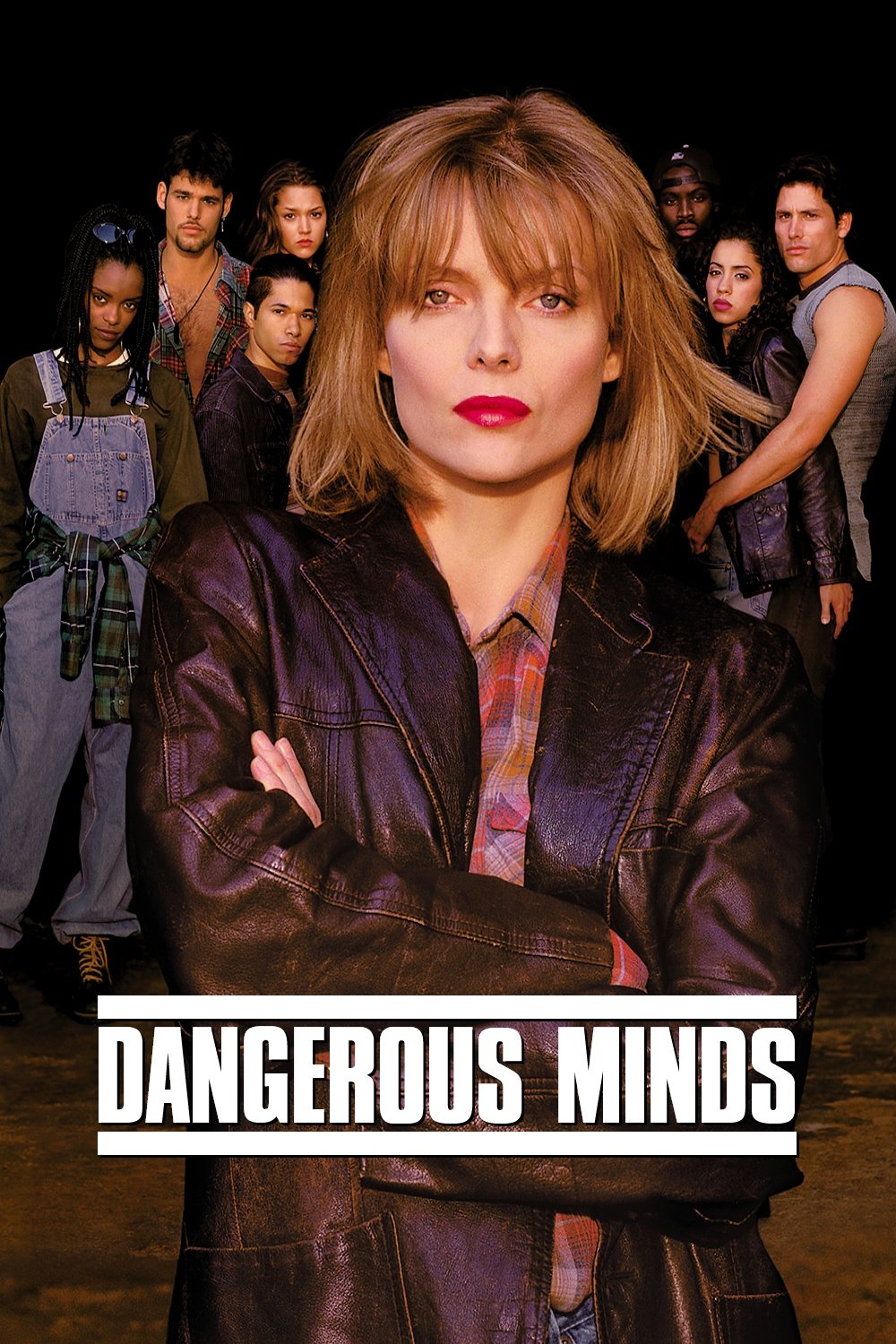
Overall Critical Reception
Every time I revisit the critical landscape around this film, I’m struck by how deeply divided it was right from the outset. On its 1995 release, I remember reading reviews that seemed almost reluctantly respectful of the performances while expressing doubts about the movie’s narrative strategies. From my perspective, critics didn’t pour out praise, nor did they universally dismiss it—it occupied a liminal space where enthusiasm and skepticism mingled. Some reviewers, especially those writing for major print publications at the time, seemed to fixate on what they saw as familiar formulas. The “inspirational teacher” movie was already an established sub-genre, and many critics couldn’t see past what they identified as genre tropes. Their commentaries often pointed out perceived predictability and flagged the way the screenplay handled its emotional beats as being unsubtle or overly broad.
As the years have passed and I’ve surveyed retrospectives and reappraisals, I’ve noticed that this ambivalence hasn’t really faded. When I look through more recent academic assessments or anniversary retrospectives, there’s an undercurrent of respect for the film as a cultural artifact, particularly in terms of what it represented in mid-1990s Hollywood. Still, I rarely find unequivocal critical admiration. I feel as though there’s a sense among critics that, while the movie was competently made and effective in certain moods, its approach to sociopolitical commentary was considered surface-level or overly sanitized. Yet, there is a recurring acknowledgment—sometimes begrudging, sometimes sincere—of the appeal of Michelle Pfeiffer’s central performance. My sense is that, even in its most negative reviews, the film is rarely written off entirely. Instead, critics have tended to point out what works (often the cast and some moments of tension) while maintaining skepticism about its deeper ambitions or narrative risks.
Even looking at ongoing discussions and think-pieces, I see a kind of “middle-tier classic” reputation forming. Critics tend to echo the same concerns aired upon release, and yet—perhaps because of audience affection, or its place in pop culture history—there’s seldom a harshly dismissive tone. Ultimately, I find that its reception, among professionals at least, inhabits a complex space: critical, but never entirely cold; hesitant, but never entirely dismissive; always circling the question of what the film set out to do, and whether it truly succeeded.
Major Film Rating Platforms
- IMDb – Explain what the general score range and voting patterns indicate.
From my ongoing monitoring of IMDb, I’ve noticed that “Dangerous Minds” has routinely maintained a moderate score, usually floating in the broad middle. This tells me a lot about the breadth of its appeal and the ceiling of its cultural impact. I see voting patterns that suggest broad familiarity—a large number of votes compared to more niche dramatic films of the era. To me, this hints at the film’s accessibility and reach, but the absence of high numbers in the upper register (those elusive 8s, 9s, and 10s) seems to confirm the prevailing view that this movie sits comfortably in the “liked but not beloved” category among casual viewers. What catches my eye is the distribution: there are enough fans who click higher ratings to edge it out of obscurity, but just as many moderates and detractors balancing out the average. When I pore over individual user comments, I find that enthusiasm often centers around nostalgia or personal connections, rather than critical acclaim. To me, this mixture underscores a pattern where the film is respected for what it is, but not championed as representative of the best cinema has to offer.
- Rotten Tomatoes – Explain the difference between critic consensus and audience response.
Each time I browse Rotten Tomatoes, I’m struck by the clear gap between the critics’ aggregated score and the audience rating. Critics’ reviews land the film squarely in the mixed to low territory, reflecting my sense of their skepticism and uneven enthusiasm. From what I’ve seen, their consensus highlights concerns over formulas and depth, echoing exactly what I find in my research of professional takes. The audience score, though, is consistently and noticeably higher, confirming my impression that mainstream viewers have a softer spot for this particular story. I see audience reviewers—especially over the years—praising the film’s inspiration and emotional impact, and this divergence always catches my eye. For me, this contrast between critic and user ratings reinforces the notion that some films simply resonate emotionally with viewers, even when critics approach them with more distance or cynicism. I draw from this that the film’s emotional earnestness may have worked more for audiences than for critics who were searching for nuance or innovation.
- Metacritic – Explain how aggregated reviews reflect critical opinion.
Whenever I check Metacritic, I’m reminded that its aggregation condenses the sometimes noisy world of film reviews into a single, visible trend. For this film, that trend is clear: middling scores. The presence of primarily average ratings from established outlets is consistent with everything I’ve gathered about the overall critical climate. I think Metacritic’s methodology—assigning weighted values and capturing both raves and pans—distills the film’s reputation very efficiently. There are a handful of higher scores from critics moved by the performances or swept up by the film’s pace, but these are balanced, if not outweighed, by lower marks from those less impressed by its approach. To my eye, the aggregated number sits in a range that confirms just how split professional responses were, and how few critics considered this a standout film. When I look at the accompanying blurbs, I see a recurring pattern: respect for the lead and occasional emotional power, but recurring doubts about originality and substance. This consistently middle-of-the-road numerical result, to me, reinforces everything I’ve gleaned from both the original round of reviews and subsequent analysis.
Audience Response and Popular Opinion
My years of tracking audience reactions to “Dangerous Minds” have left me with the clear conviction that general viewers relate to the film much more warmly than the average critic. Even in casual office conversations and online forums, I often hear people recalling the film’s inspirational atmosphere or memorable scenes. One of the most telling signs for me is the way certain lines, images, and—perhaps most notably—the soundtrack, have cemented themselves in collective pop memory. This tells me that, for all its critical reservations, general audiences felt the film clicked emotionally in ways that reviewers found more complicated to unpack.
From what I’ve seen and read, viewers are quick to cite the film’s positive impact, its feel-good quality, and how it spoke to them during their formative years. Those praising it most enthusiastically often describe watching it for the first time as teenagers or young adults, indicating that it struck a chord with a generation coming of age in the 1990s. Viewers frequently express strong appreciation for the lead performances—especially Michelle Pfeiffer—whom many remember as a rare example of a “tough love” teacher character who seems both approachable and determined. I also notice, when reading more recent reactions, that nostalgia plays a heavy role in fans’ affection.
I find it fascinating that this divide between critical opinion and audience resonance hasn’t faded over time. In online user reviews, personal anecdotes about how the film “inspired” or “motivated” crop up far more often than abstract discussions about cinematic craft or cultural context. Even viewers who are aware of the criticisms tend to excuse or overlook perceived weaknesses, focusing instead on how the movie “made them feel.” For me, this consistent warmth—rooted in the film’s tone, performances, and certain memorable sequences—defines its popular reputation. It is, in many ways, a film that succeeded at forging a strong connection with its public, regardless of how it was scrutinized by professionals.
Points of Praise
- Strength 1 – Charismatic Leading Performance: When I reflect on what works best about the movie, Michelle Pfeiffer’s commitment to her role instantly comes to mind. Her performance is widely cited, and I personally find her blend of vulnerability and resolve to be compelling. Whether she’s holding a classroom’s attention or navigating the film’s more emotive scenes, she brings an earnest energy that galvanizes the rest of the cast. Many critics and viewers alike have noted that her presence alone elevates the film, giving it an emotional core that’s hard to ignore. In my view, this anchoring role is what most consistently attracts praise and remains a touchstone in discussions about the film’s strengths.
- Strength 2 – Emotional Accessibility: I’ve always noticed that the film’s emotional beats are direct and approachable, a quality audiences tend to appreciate. “Dangerous Minds” wears its sentiment on its sleeve, opting for overt inspiration rather than subtlety. Some critics might see this as a fault, but I think the film’s emotional clarity delivers exactly what many viewers want from its genre: hope, uplift, and a sense of overcoming odds. For a certain kind of moviegoer, these qualities are not just strengths—they are crucial to the overall experience.
- Strength 3 – Memorable Soundtrack: To me and countless others, the film’s soundtrack—most notably featuring Coolio’s “Gangsta’s Paradise”—became synonymous with the movie itself. I’ve noticed that it’s not just background music; it shapes the cultural memory and mood of the film. Many fans cite the soundtrack as a highlight, and even those who critique the story often find something to praise in the way the music underscores the emotional highs and lows. From my perspective, the soundtrack provides both period flavor and anthemic energy, making the film linger long after the end credits roll.
Points of Criticism
- Criticism 1 – Predictable Story Arc: My first reaction, even during early viewings, was that the narrative structure felt exceedingly familiar. This has surfaced in nearly every critical discussion I’ve encountered—the progression, conflict, and resolution unfold much like other “hero teacher” dramas. Critics regularly point out that the story moves along a well-trodden path, offering few genuine surprises. Having seen many films in this mold, I agree that originality isn’t the movie’s strong suit.
- Criticism 2 – Simplification of Social Issues: I frequently encounter the argument that the film reduces the complexities of urban education to digestible, even clichéd, narrative beats. When I consider the conversations around representation and authenticity in Hollywood’s treatment of inner-city life, I see that this movie often gets called out for smoothing over the harsher realities or offering quick, easy resolutions. For me, this tendency toward simplification is not just a critical quibble—it’s a substantive issue that continues to affect how the film is perceived by those looking for depth and nuance.
- Criticism 3 – Formulaic Supporting Characters: One pattern I can’t help but notice is how the supporting cast, while energetic, tends to fall into familiar stereotypes. I’ve read and personally felt concerns about the lack of individual development for many of the students, who sometimes function primarily as plot devices to be “saved” or “inspired.” Reviewers often describe these characters as thinly drawn, a criticism I think is fair when reflecting on screen time and character arcs. For viewers and critics searching for more dimensional portrayals, this aspect remains a consistent sticking point.
How Reception Has Changed Over Time
In tracking the reputation of “Dangerous Minds” over nearly three decades, I’ve found that its standing hasn’t shifted dramatically, but it has settled into a particular kind of cultural niche. At first, the immediate critical response was tepid—occasionally enthusiastic about individual elements, but generally cautious. Over time, I’ve detected no significant critical reevaluation or resurgence that would vault the film into a “lost classic” or “overlooked gem” category. Instead, the consensus seems to have stabilized: it’s a product of its time, valuable as a mainstream touchstone of mid-90s Hollywood, but rarely cited as a central example of cinematic greatness.
What stands out most for me is how its popular appeal has endured. Audience affection, as I’ve observed, has remained steady or even grown thanks to nostalgia and the enduring power of its music. In contrast, modern critics—particularly those revisiting it through contemporary lenses of representation and authenticity—tend to focus increasingly on its limitations. The cultural conversation now often frames it as a case study in feel-good filmmaking, with all the positives and negatives that implies. I’ve noticed that modern educators and activists frequently use the film as a launching point to discuss more authentic or robust portrayals of education and adversity, which means its legacy now serves more as context than as a benchmark.
Ultimately, from my vantage point, the reception has not undergone dramatic escalation or free-fall. Instead, the film has achieved a form of stability—maintaining its fan base, its status as a touchstone for classroom drama, and its reputation for a memorable soundtrack. It persists not because critics have reembraced it in a new, more generous light, but because audiences who loved it continue to champion it in memory, playlist, and casual conversation.
To better understand why opinions formed this way, exploring background and origins may help.
🎬 Check out today's best-selling movies on Amazon!
View Deals on Amazon