
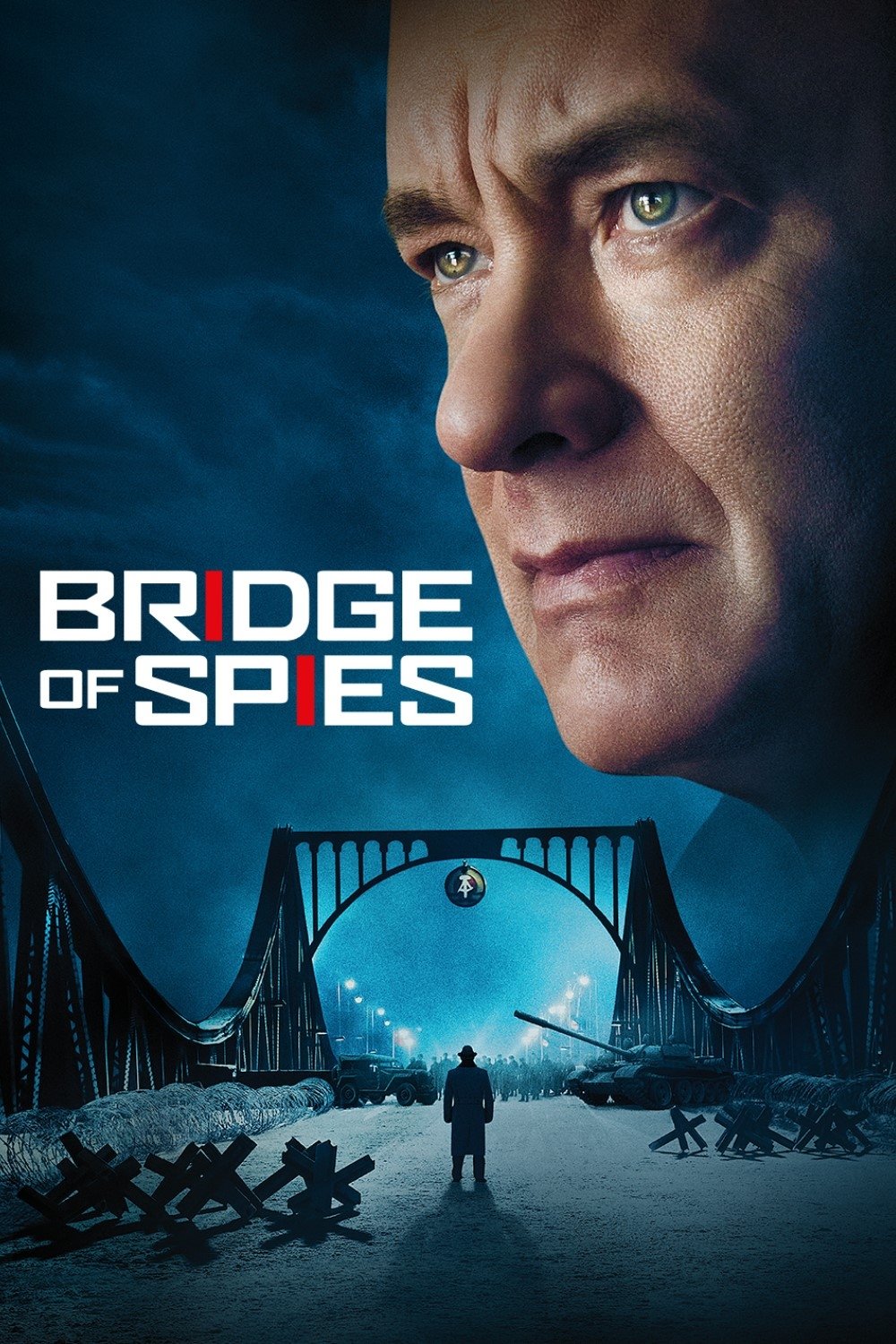
Overall Critical Reception
Few films left me with that peculiar feeling of satisfaction mixed with quiet admiration quite like my first experience watching Bridge of Spies. When the film debuted, I remember being struck not just by the attention it garnered, but the measured way critics seemed to line up in agreement about its craftsmanship. Reviewing the collective tone in major publications and industry journals, I found a strong undercurrent of respect among critics. They saw Steven Spielberg’s approach as classical, in the sense of restrained storytelling and methodical pacing—almost as if the director deliberately tried to evoke a lost era of adult thrillers. Initial reactions often praised the film’s seriousness and sophistication now rare in mainstream American cinema, particularly from a major studio.
From my perspective, the reviews were not the kind that shout with dazzling excitement or bold claims about reinvention. Instead, they radiated with a sort of warm, considered approval—appreciating sound technical craft, uniformly strong performances, and a dignified script. Many reviewers I read stressed a kind of elegance, where the film’s deliberate unrushed tempo seemed to reflect Spielberg’s confidence that tension could be cultivated without spectacle. Tom Hanks, in particular, emerged almost unanimously as a linchpin of praise. Critics honed in on his sympathetic, dignified portrayal, seeing it as one of his more nuanced roles in years.
Reading year-end roundups around 2015 and 2016, Bridge of Spies frequently appeared on “best of” lists, though seldom in the top tier—often as an admirable and solid entry rather than a game-changer. What interested me was the way later, retrospective analysis tended to contextualize the film within Spielberg’s broader oeuvre. There was often admiration for his maturity as a director in handling the complexities of the Cold War subject matter. This was especially true as time passed; anniversaries and reassessments often highlighted how the measured suspense and moral ambiguity aged well compared to some of Spielberg’s more overtly sentimental works.
I found some niche critics who argued Bridge of Spies was perhaps overshadowed by the director’s more overtly audacious films, and that its subtlety worked both for and against it—it was praised for mastery, yet sometimes overlooked in wider pop culture conversations. Still, I saw little actual backlash; instead, the dominant critical mood both at release and in later years radiated stable, high regard rather than sweeping adoration. Serious critical accusations of missteps or flaws were rare, with many highlighting minor points of dissatisfaction rather than major structural issues. Where it lacks, critics seemed to agree, is more a matter of taste rather than any technical shortcoming.
Major Film Rating Platforms
- IMDb – Explain what the general score range and voting patterns indicate.
I always look to IMDb as a sort of international barometer, reflecting collective impressions from cinephiles and casual viewers alike. For Bridge of Spies, I noticed the average rating sits comfortably within the high spectrum, but not at an elite outlier status. The number of user votes is substantial, pointing to a wide and varied audience reach. The bell curve of ratings clusters mostly around the 7-to-8 range, and for me, this implies broad satisfaction and strong consensus on quality, even if it stops short of fervent landmark status. Unlike “fan favorite” blockbusters with polarizing upvotes and downvotes, the distribution here is strikingly even, with very few extreme scores, signifying reliable appreciation rather than heated debate.
- Rotten Tomatoes – Explain the difference between critic consensus and audience response.
On Rotten Tomatoes, I notice the film achieves a notably elevated critic approval rate, revealing just how consistent reviewers were in their endorsement. Many critical blurbs highlighted the script’s intelligence, sensitivity in handling political complexity, and the understated power of the performances. When I contrast the critic score with the audience rating, I see the difference doesn’t constitute a stark divide, but audience ratings do trend a shade lower. I interpret this as a sign that while general moviegoers respected the film, some found its pace or lack of immediate thrills to be less engaging than anticipated. Yet the gap isn’t wide—it supports the idea that mainstream viewers still recognized its craft, if not quite as enthusiastically as the critics did. Most user commentary I’ve encountered features commendations for authenticity and “adult storytelling” while occasionally expressing yearnings for more action or emotional peaks.
- Metacritic – Explain how aggregated reviews reflect critical opinion.
Metacritic’s weighted average paints a compelling picture of acclaim, albeit of a measured variety. I take its aggregated reviews as a gauge of the critical elite—authors from respected outlets whose opinions are distilled into a single figure. For Bridge of Spies, that score doesn’t soar into the “masterpiece” stratum but remains firmly in “highly favorable” territory. To me, that translates as near-universal agreement on professional craftsmanship, a lack of glaring deficiencies, and appreciation for the narrative’s precision. The few outlying lower scores on Metacritic often cite the film’s intellectual restraint or unhurried tempo as the main drawbacks. High scores, on the other hand, emphasize the screenplay’s sophistication and Spielberg’s veteran subtlety. This balance, in my reading, signals a consensus rarely afforded to genre pictures—a blend of old-school seriousness and contemporary relevance.
Audience Response and Popular Opinion
My impression, comparing conversations in film forums, anecdotal testimony, and box office momentum, is that Bridge of Spies appealed to a more mature, possibly older-skewing demographic. The most common thread in audience response that I noticed was one of quiet respect rather than raw excitement. Many viewers reacted strongly to Tom Hanks’ performance, often citing him as the emotional anchor and primary reason for their positive takeaway. However, I repeatedly came across remarks noting the film’s slower pace and lack of high-energy set pieces—elements some found less arresting than other Spielberg works. I encountered a kind of “relaxed admiration”—an appreciation not fueled by spectacle or twist-driven narrative, but by a belief that the film addressed its complex material with authenticity and polish.
In social settings—think watercooler conversations or online threads—people seemed less inclined to passionately debate its merits, instead describing it as a “quality film” or “thoughtful drama.” As someone who has tracked responses over time, I seldom observed much backlash, which is somewhat rare for movies with a prominent political or historical footing. In contrast to films that split viewers along ideological lines, Bridge of Spies typically sparked measured engagement about the Cold War or legal ethics, rather than contentious dispute over the film’s intentions. I attribute this in part to Spielberg’s decision to avoid sentimentality or overt moralizing—a choice that I think made the film more palatable to a broader cross-section of viewers.
While enthusiasm did not reach the fever pitch associated with blockbusters or cult classics, the prevailing mood in my reading has been one of satisfaction—audiences generally respected its intelligence and mature atmosphere, even if they weren’t compelled to revisit it frequently. The kind of word-of-mouth I have come across most can be summed up as: “If you’re in the mood for a grown-up story and nuanced performances, you’ll be rewarded; if you want pure adrenaline, you may find it wanting.” This pattern echoes both in general discussions and in the comparative steadiness of its various online audience ratings.
Points of Praise
- Precision in Direction and Tone – Explanation
To my eyes, one of the hallmark strengths of Bridge of Spies is Spielberg’s command of tone and precision. Rather than relying on the director’s trademark spectacle, I see a carefully calibrated hand steering the film toward realism and restraint. Spielberg evokes a palpable sense of tension and atmosphere through measured pacing and sharply composed visuals, creating suspense more through implication and detail than eruptive action. Critics I respected frequently underscored how the film manages to be riveting not because of chase sequences, but because of courtroom maneuvers, terse negotiations, and understated shifts in power—elements Spielberg handles with assurance. For me, this gives the film a timeless feel, reminiscent of classic political dramas that draw you in slowly, but hold your attention with craft rather than pyrotechnics.
- Tom Hanks’ Lead Performance – Explanation
Having watched Hanks’ work over decades, I can say his performance here feels like a masterclass in restraint and credibility. The portrayal doesn’t lean on overt displays of bravado or melodrama, but on the subtle conviction of a man driven by principle. Critics and viewers both latched onto Hanks’ ability to infuse his character with warmth, quiet humor, and determination, all without tipping into sentimentality. In my own assessment, he’s a major source of the film’s accessibility—making complex legal and political wrangling feel immediate and human. When people discuss highlights, I frequently hear his name paired with words like “steadfast” and “reassuring,” a testament to the film’s anchoring strength.
- Scriptwriting and Dialogue – Explanation
If there’s a unifying thread in my reviews and those of others whose criticism I value, it’s appreciation for the screenplay and dialogue’s intelligence. Penned in part by the renowned Coen brothers, the script finds its power in richly drawn conversations, carefully constructed exchanges, and understated wit. Viewers like myself often point out how the dialogue does much of the narrative’s heavy lifting—unfolding political context, character motivation, and tension without resorting to expositional overload or wooden speeches. I noticed that critics from both sides of the Atlantic frequently praised how the script balanced exposition with subtlety, making complex historical events digestible without oversimplification.
Points of Criticism
- Measured Pacing and Lack of Momentum – Explanation
As much as I admire Spielberg’s deliberate pacing, I think it’s this very characteristic that has drawn a fair share of mild criticism. Those seeking adrenaline or the escapist rush of Spielberg’s most kinetic works have expressed that Bridge of Spies can feel unusually slow. The careful build-up, while thematically appropriate, sometimes comes across as plodding for viewers wanting brisk escalation or significant plot twists. I found the first act to be particularly susceptible to complaints of sluggishness. Multiple audience reviews and even a few critical voices have labeled it as “too patient” for its own good. In my own experience, I understand the desire for a film to accelerate, and here, the slow-burn approach could understandably test some viewers’ patience.
- Emotional Distance and Restraint – Explanation
Another point I’ve seen discussed—and felt myself—is a kind of emotional distance that results from the film’s controlled tone. Although I appreciate the subtlety, I think this deliberate reserve sometimes creates a barrier to emotional immersion, especially when stacked against more exuberant or sentimental historical dramas. Multiple critics I follow described moments that seemed “under-heated” or lacking in passion, particularly in the character interactions outside of the central duo. For all its craft, Bridge of Spies consciously avoids big emotional crescendos, which can, for some, leave the film feeling more cerebral than moving. My sense is that while some celebrate this as maturity, others interpret it as a limitation in storytelling impact.
- Limited Scope in Supporting Characters – Explanation
The third consistent criticism I track centers on the handling of supporting characters. While the central pair—Hanks’ Donovan and Mark Rylance’s Abel—are expertly drawn, I found that secondary figures sometimes registered as thinly sketched or underdeveloped. Several critics, both at release and in later retrospectives, observed that family members, colleagues, or antagonists often fulfill narrative functions more than they serve as fully realized individuals. In my reading, some audience members yearned for a deeper exploration of these ancillary characters to better support the primary emotional arcs. I agree that the focus serves the tightness of the narrative, but there are moments when the peripheral perspectives fade into background noise, limiting the dramatic breadth of the story.
How Reception Has Changed Over Time
Reflecting on the years since Bridge of Spies premiered, I observe that its standing has, for the most part, remained admirably stable. My sense is that the calm, measured appreciation the film received at the outset has, if anything, solidified with time. Unlike some awards-season entries that fade after initial hype, or divisive works that fluctuate wildly in critical standing, Bridge of Spies has settled into a reputation as one of the more reliably respected films of its era.
It’s become, in my eyes, a reference point for mature, intelligent mainstream filmmaking, especially at a time when the Hollywood landscape is more crowded with franchise-centric or “event” properties. Each time I browse director retrospectives or career summaries for Hanks and Spielberg, the film surfaces as an example of confident, meticulous mid-career work. Its technical execution is still admired; in particular, Mark Rylance’s performance has enjoyed increased appreciation and is often discussed as one of the decade’s standout supporting turns. I’ve noticed a slight uptick in viewers returning to the film in times of political unease, possibly because its narrative about negotiation and principle feels perpetually relevant.
Because of its steady critical base, the film hasn’t undergone the sort of radical reevaluation sometimes seen with more controversial or groundbreaking works. Audiences don’t seem to have shifted in their broad opinion, either. Box office tallies and streaming numbers suggest the film is regularly revisited but not at the fevered pace of retro-cult favorites. On film forums, the same strengths and weaknesses are identified now as at release, though there’s sometimes greater appreciation today for the film’s earnest methodical approach, especially among those disillusioned by flashier trends. In summation, from my vantage, Bridge of Spies endures as a quietly assured entry in the recent history of American cinema—consistently recognized for its craftsmanship and refusal to rely on fleeting trends.
To go beyond scores and understand what shaped these reactions, background and interpretation can help.
🎬 Check out today's best-selling movies on Amazon!
View Deals on Amazon