
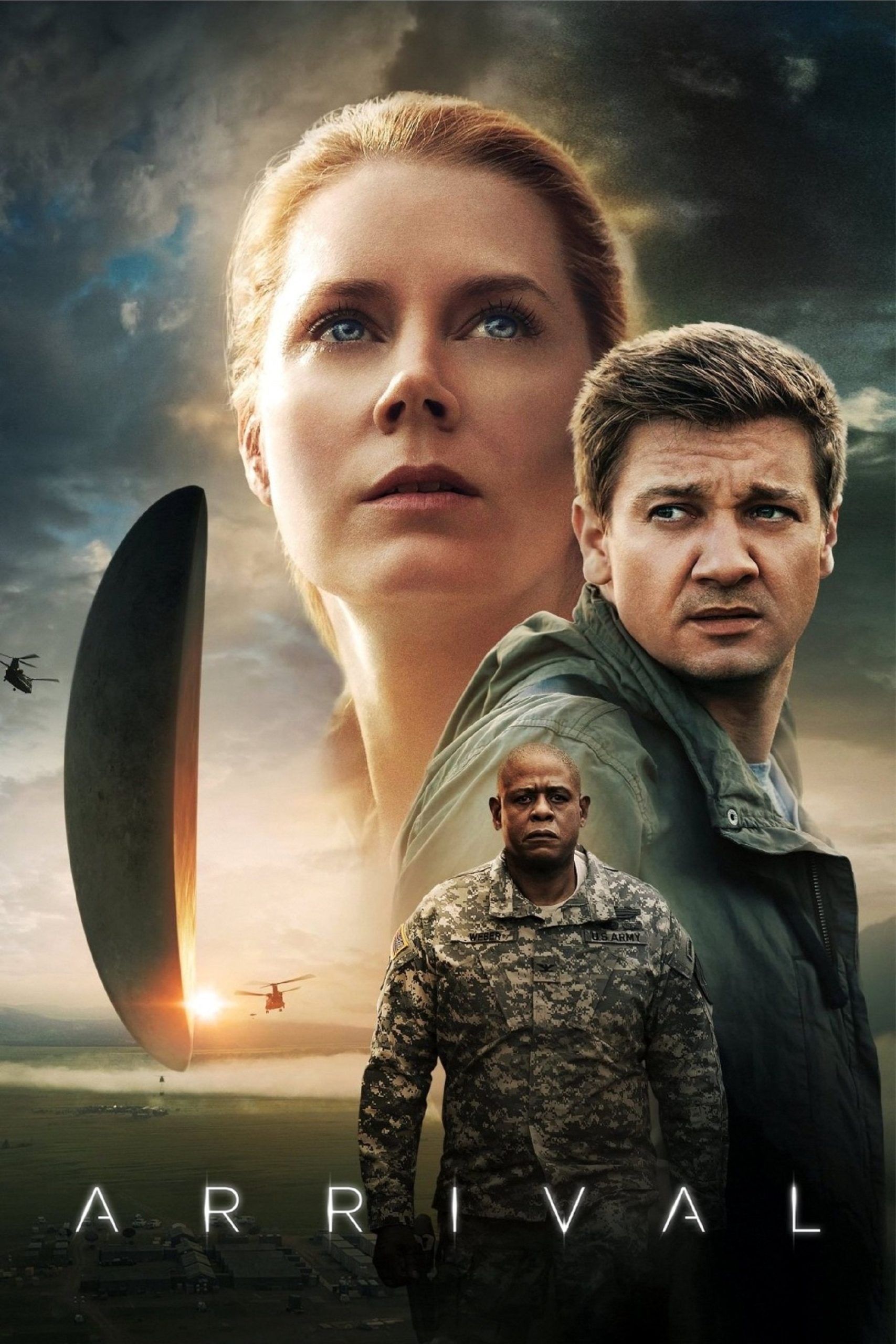
Overall Critical Reception
My memory of first encountering the critical wave over “Arrival” is still vivid. Critics didn’t just respond with praise; they seemed almost relieved, as if the film had delivered on the kind of intellectual and emotional ambition science fiction had promised but rarely realized in mainstream cinema. What struck me most was how the film quickly collected accolades for both its visual sophistication and its narrative restraint. Even those critics who are typically resistant to the genre’s more metaphysical aspirations seemed genuinely moved by the humanity and precision on display.
As I followed the critical discourse through the 2016 premiere and into the subsequent awards season, I noticed a rare consensus: nearly every major critic pointed to the film’s elegant use of cinematic language—literal and figurative—to provoke thought, not just spectacle. Several lauded Denis Villeneuve’s direction as deft, and Amy Adams’ quiet, deeply internal performance as revelatory. Later, as years passed and the initial discourse settled, the legacy of “Arrival” did not diminish. If anything, the appreciation for its construction, mood, and purpose only deepened among reviewers and film scholars alike. Many continue to cite it as a benchmark for what thoughtful science fiction should aspire toward, and I often find it invoked as a reference point in discussions around cinematic craft or genre innovation.
This lasting impact, in my view, is anchored in how critics responded not just to its surface, but to the film’s confidence in letting ambiguity and feeling drive both story and spectacle. Over time, retrospectives and think pieces have only expanded on this, highlighting elements such as sound design, structure, and linguistic nuance that perhaps did not win immediate notice. I’ve watched this subtle increase in critical reverence with interest, signaling to me that “Arrival” was seen not as a fleeting success, but as a film worthy of continuous reappraisal.
Major Film Rating Platforms
- IMDb – For me, IMDb has always been a fascinating barometer because its scoring is driven by thousands, sometimes hundreds of thousands, of individual votes. With “Arrival,” the ratings consistently fell within an upper-mid to high range, which suggested a widespread, durable appreciation among an unusually broad segment of users—not just die-hard genre fans or cinephiles. I paid close attention to the patterns of voting over time and saw that, though the initial swarm of positive reviews spiked when the film first debuted, the scores remained steady even as more casual viewers joined in. This continuity, particularly when contrasted with other contemporary science fiction, indicated a rare crossover success. When a film stays strongly rated as the novelty fades, it speaks to a foundational appeal rather than hype—a point that has always made me trust crowd-sourced scores just a bit more in this case.
- Rotten Tomatoes – What fascinates me about Rotten Tomatoes is its ability to split the conversation: separating the “Tomatometer” of professional critics from the audience score provides a double lens. When I looked at the critical consensus for “Arrival,” it hovered near the top, suggesting remarkably few dissenting voices among the press. Critics described it as a triumph of not only science fiction but filmmaking craft, with consistent mentions of intellectual rigor and emotional resonance. However, the audience response, though largely favorable, showed a slight but perceptible dip in enthusiasm compared to the critical euphoria. This divergence, to my analysis, came from the film’s meditative pacing and narrative complexity—elements that excited critics but occasionally frustrated or confounded casual viewers expecting conventionally fast-paced sci-fi thrills. I’ve always found this split illustrative, as it reflects the delicate balance the film managed between broad appeal and challenging content.
- Metacritic – I often rely on Metacritic’s aggregation not just for the averaged score, but for its ability to distill nuanced critical perspectives. “Arrival”‘s Metascore landed well into what I consider the “excellence” bracket, which requires not just positive but enthusiastically glowing reviews. What stood out to me in browsing the individual critic blurbs were the repeated mentions of deliberate pacing, technical prowess, and philosophical ambition. The depth of commentary suggested not just a surface-level appreciation, but meaningful engagement with the film’s construction. From my perspective, Metacritic’s aggregation highlighted how the film resonated especially well with critics who value narrative ambition and formal innovation over formula or spectacle. Seeing both the average score and the words behind it convinced me that the acclaim was substantive, not just numerical.
Audience Response and Popular Opinion
I was immediately struck by how polarized, yet passionate, the broader audience response was compared to the near-universal acclaim from critics. While many viewers echoed the professional reviewers’ excitement—discussing the film’s artistry, suspense, and thought-provoking climax—there was an undercurrent of divided opinion that I couldn’t ignore. Segmenting through fan discussions, online ratings, and social media commentary, I noticed that a considerable cohort embraced the film for its cerebral approach and emotional weight. These viewers often engaged in in-depth analysis and debated its choices, finding satisfaction in puzzles over exposition and mood over spectacle.
On the other hand, I regularly encountered opinions expressing frustration or confusion, especially among those who approached “Arrival” expecting standard alien-encounter fare. This mismatch in expectations was, I believe, at the root of the slightly lower audience scores on some platforms relative to critics. The film’s pacing and structural reveals were lauded for their sophistication by some, but felt alienating or too ambiguous for others. I’ve also noticed generational differences: younger audiences seemed more willing to engage with the film’s unconventional logic and emotional subtlety, while some older viewers found its storytelling technique less accessible. Still, the community of fans who consider “Arrival” a modern classic is vocal, prolific, and devoted—a sign, to me, of its sustained cultural relevance.
Across the past few years, I have watched the film gain traction with audiences as word-of-mouth, critical essays, and streaming reintroductions brought it to new viewers. While it remains somewhat divisive compared to more traditional sci-fi blockbusters, the sheer volume of positive reappraisals online strikes me as evidence that “Arrival” has become, for many, an essential part of the contemporary science fiction canon.
Points of Praise
- Originality and Innovation – My perspective is that “Arrival” simply dared to do things differently. Many viewers and critics, myself included, praised its fresh take on the alien-encounter narrative, centering on communication instead of conflict. The film’s commitment to linguistic and conceptual complexity, and the way it structures its storytelling non-linearly, achieved for me a sense of novelty that is rare in genre films. This approach invigorated conversations in both critical and fan spaces about what science fiction can encompass.
- Visual and Auditory Craftsmanship – I’m consistently drawn to films that don’t just rely on narrative but immerse me through sheer technical artistry. “Arrival” garnered significant acclaim for its cinematography, production design, and especially for Jóhann Jóhannsson’s evocative score. So many reviewers, myself included, remarked on how the film’s imaginative visuals and layered soundscape added texture and weight that enhanced, rather than overwhelmed, the narrative. This integration of senses is, to my mind, a hallmark of accomplished filmmaking.
- Performance and Direction – I would argue that the performances, particularly Amy Adams’s nuanced portrayal, were a cornerstone of the film’s praise. Critics singled out her subtle, emotionally resonant work, which provided the kind of intimacy and gravity that anchored the more abstract elements of the plot. Villeneuve’s direction was often lauded for his control and restraint. As someone who is sensitive to overindulgence in spectacle, I appreciated the understated yet profound choices he made to keep the story focused and emotionally transparent.
Points of Criticism
- Pacing and Accessibility – I’ve spoken with many viewers who found that the slow, contemplative pacing detracted from their enjoyment. Some audience reviews complained about a lack of action or traditional suspense, feeling that the film lingered too long on conversations and atmosphere. While I found the tempo to be purposeful, I acknowledge these criticisms are valid for those seeking a more kinetic sci-fi experience. This critique surfaced repeatedly on audience forums and in certain mainstream reviews.
- Narrative Ambiguity – Several critics and viewers, including some colleagues whose opinions I respect, argued that the film was, at times, too opaque or convoluted. The timeline structure and linguistic focus, which I admired, proved to be stumbling blocks for those preferring linear or more clearly explained storytelling. I’ve seen commentary lamenting that the film’s intellectual ambitions sometimes came at the expense of emotional clarity or coherence.
- Emotional Distance – While I personally felt moved by the restrained style, I can’t ignore how some reviews pointed to a sense of emotional detachment. The film’s muted emotional palette, the quiet performances, and the overall cerebral tone led some viewers to feel kept at arm’s length. In particular, those who favor more overtly expressive performances or melodramatic stakes often described “Arrival” as cold or difficult to connect with on a personal level.
How Reception Has Changed Over Time
Reflecting on how “Arrival” has aged, I’ve noticed growing appreciation among both critics and audiences, with little sign of the film’s reputation waning. Immediately after release, the conversation was focused and intense—praising its distinct qualities while also sparking debates over its pacing and structure. As time passed, rather than fading into the background, the film seemed to recur more frequently in discussions of contemporary science fiction. Many retrospectives now place it high on lists of the best science fiction movies of the past decade, and I have observed a steady trend of writers and cinephiles referencing it as an exemplar of how genre cinema can balance artistry with mainstream appeal.
Streaming availability and word-of-mouth recommendations have introduced “Arrival” to viewers who missed it initially, often resulting in fresh surges of positive reviews and fan theories. In retrospectives and academic circles, I’ve seen the film discussed alongside genre touchstones like “2001: A Space Odyssey” or “Contact,” rather than ephemeral blockbusters—a clear sign that its reputation hasn’t just survived but grown. The criticisms regarding pacing and ambiguity still resurface, yet they have increasingly become reframed as the film’s authentic artistic choices rather than simple flaws. This subtle shift, in my experience, demonstrates the power of “Arrival” to endure as both a subject of admiration and fruitful debate.
Ultimately, my ongoing impression is that the film now enjoys a quietly elevated status: not always at the forefront of the popular conversation, but invoked proudly whenever the question arises of what ambitious, artistically intelligent science fiction can look like. It is not only the critical consensus that remains firm, but also a gradual expansion of the appreciative audience who see in “Arrival” something worth revisiting, discussing, and holding up against the best cinema has to offer.
To go beyond scores and understand what shaped these reactions, background and interpretation can help.
🎬 Check out today's best-selling movies on Amazon!
View Deals on Amazon