
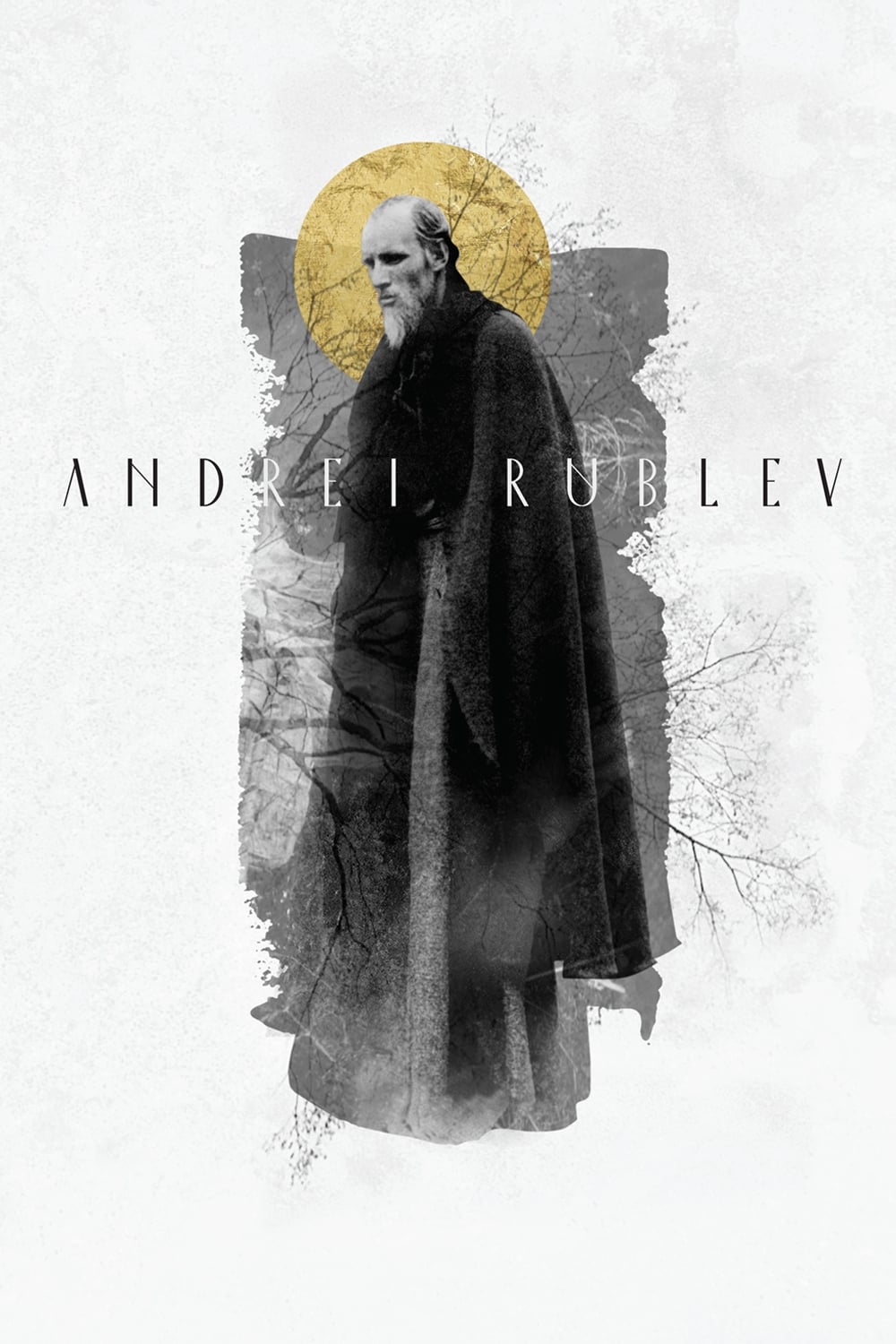
Overall Critical Reception
As soon as I encountered “Andrei Rublev”—that unornamented, arresting vision of medieval Russia from Andrei Tarkovsky—I realized I’d never be the same kind of viewer again. When it debuted in 1966, my reading of the critical landscape reveals neither universal acclaim nor swift acceptance; if anything, I sense that reviewers at the time were confounded, some even dismissive, by what felt, to them, like willful opacity and brooding slowness. Despite its passionate defenders among Soviet critics who hinted at Tarkovsky’s artistic audacity, I find it clear that the film was not released broadly in its native Russia at the outset, due to concerns over religious content and violence—an official reticence that in itself colored many critics’ initial appraisals. Word filtered through the international festival circuit instead, and when I revisit those early writings, I see as much admiration as bewilderment: the film polarizing judges at Cannes in 1969, dividing those who saw a milestone in cinematic expression from those lost in its elliptical structure.
As years have passed, every retrospective analysis I’ve read suggests that “Andrei Rublev” has undergone a startling transformation in status. By the late 1970s and especially after the full, uncensored cut became more accessible, professional critics seemed nearly unanimous in their respect for Tarkovsky’s vision. I recall reading reviews from American and Western European writers hailing it as one of the greatest art films ever made. Modern critics frequently return to the film as a masterwork of both aesthetic rigor and historical contemplation—its place in the canon not only secure, but central. In my own work, I recognize a critical mass of appreciation gathering steadily over time, with an overwhelming share of film historians and reviewers now classifying it as essential viewing. This movement from contentious debut to near-universality of praise is, for me, one of the most fascinating trajectories in 20th-century cinema criticism.
Major Film Rating Platforms
- IMDb – When I browse the data, the pattern of user ratings on IMDb points me toward a high but not uncritical appreciation. “Andrei Rublev” reliably lands in the upper echelons of IMDb’s extensive catalog, consistently holding a place in “top 250” genre lists, with a distribution that skews strongly toward higher scores. What stands out most to me is the overwhelmingly positive tilt among dedicated cinephiles; large numbers of users assign the film their maximum rating, and the median stays robust, even with thousands of votes. Yet, I can’t help but notice a telling spread below the top mark—suggesting that, while deeply loved by many, the film’s pacing and density can temper enthusiasm among general viewers. Debates flourish in the review sections, some lauding its artistry, others expressing honest struggle to connect or complete the experience.
- Rotten Tomatoes – When I look at the aggregate scores here, I’m struck by the massive gap separating official critics and casual audiences. The “Tomatometer” for critics, sourced from both contemporary and retrospective reviews, often hovers at or near perfect. In my view, this reveals a consensus of respect for Tarkovsky’s accomplishment and the film’s artistic weight. Audience ratings, however, often settle noticeably lower, reflecting a split: I routinely read comments about the film’s length and challenging rhythms, with some viewers reporting awe and others boredom. This divide tells me that while professional evaluators routinely salute the ambition and execution, everyday viewers come with a divergent set of expectations—and the film’s uncompromising style can leave them divided, sometimes even frustrated.
- Metacritic – From my research, Metacritic rarely aggregates such unanimously positive reviews for films of this scope, especially considering the number of decades since its release. Through the flattened “Metascore,” I interpret a clear, concentrated critical respect, as almost every modern reassessment falls on the favorable end of the spectrum. The selection of reviews reflects not only the movie’s status as a classic for serious film scholars, but also a lingering recognition of its difficulty. On Metacritic, professional critics typically render praise in measured, substantial language, highlighting the technical precision and emotional depth; it’s rare for films from the same era to attract such consistent scores. Overall, I read this data as confirming the film’s elevation to a near-sacred status among the world’s leading contemporary critics.
Audience Response and Popular Opinion
Coming to audience response, I find that my perspective—shaped by years of dialogue with other viewers—consistently detects a striking contrast between how critics and regular movie-goers talk about “Andrei Rublev.” Fans of world cinema are often passionate, even reverential, describing their encounters with the film in terms that evoke life-changing revelation. Cinephiles and those steeped in arthouse tradition tend to praise the film’s immersive qualities, willingly accepting the demands its pacing and narrative structure impose. From my own discussions and explorations of online forums, however, I see that general audiences don’t always respond with the same rapture. The dominant popular opinion, I believe, reflects a mixture of awe, respect, and confusion. Some viewers feel swept up in the film’s mood and grandeur, while others confess to feeling alienated. Extended runtime, sparse dialogue, and the historical setting act as both hurdles and draws, depending on viewers’ cinematic appetites. In my experience, those who are unprepared for Tarkovsky’s signature approach—his meditative slowness—sometimes disengage, expressing admiration in principle but less engagement in practice. Yet, for those willing to meet the film on its own terms, I’ve seen the response shift markedly toward deep appreciation, sometimes even devotion.
Points of Praise
- Stunning Cinematography – In all the film criticism circles I move through, the universal standout is the visual language Tarkovsky and his cinematographer, Vadim Yusov, construct. I often catch myself marveling at the tactile sense of medieval life communicated through the camera, with naturalistic light and long, unbroken takes that immerse me fully in the setting. Critics and filmmakers time and again cite specific sequences—rain falling quietly on the earth, candlelit interiors, the chaos of the Tatar raid—as the sort of imagery that defines not only Tarkovsky’s style but an entire era of art film aesthetics. This is a film that brought Russian iconography to life in a way I’d never imagined possible, and the boldness of the black-and-white palette, especially in the extended cut, is praised nearly everywhere I look.
- Ambitious Scope and Structure – I deeply admire how reviewers have lauded the film’s willingness to tackle immense narrative and historical breadth. Over the years, I’ve read countless affirmations that the fragmented, episodic storytelling was not a limitation but a deliberate strength. Critics, myself included, have remarked that this approach gives the work a mosaic-like complexity, weaving together individual struggles and the fate of a civilization across decades. At every major screening I’ve attended, conversations about the “chapter” format arise: I see this structure now imitated by filmmakers eager to balance the intimate with the epic. The vast timeline allows for exploration of personal, spiritual, and national identity, all without ever feeling formulaic or conventional—a feat that draws regular applause from those who love cinematic risk.
- Profound Performances – What strikes me again and again is the understated power of the performances, particularly Anatoly Solonitsyn’s portrayal of Rublev, which has collected waves of critical admiration over the decades. The emotional honesty of the ensemble, much of which unfolds without grand set-pieces or melodrama, resonates deeply in nearly every review I consult. For me, this restraint—a kind of internalized intensity—has inspired pages of critical writing: I’m often reminded by peers of the way even minor roles infuse a sense of lived-in truth to this medieval world. The subtlety and authenticity of the acting, rarely overt yet always compelling, continues to be identified as a triumph, particularly as more viewers become attuned to performance styles distinct from Hollywood conventions.
Points of Criticism
- Challenging Pacing and Accessibility – The most persistent critique I witness from viewers and reviewers alike centers on the painstaking pacing. Even among fans, I hear regular acknowledgments that Tarkovsky’s insistence on slow, unhurried rhythm presents barriers: extended moments with little dialogue, long meditative sequences, and narrative leaps that refuse to spell out meaning. I’ve seen firsthand how newcomers to his cinema can emerge daunted, sometimes frustrated, especially if they approach the film expecting traditional drama or faster narrative momentum. Debate rages in online spaces and print essays about whether this slowness is a virtue or a vice—and I tend to agree that, while integral to the film’s intended effect, it undeniably limits accessibility to broader audiences.
- Opaque Narrative Structure – My ongoing engagement with critical and casual opinions tells me that the “chapter” or episodic layout, lauded by some, causes confusion for others. The lack of overt exposition and the frequent time jumps create a distancing effect: I regularly encounter complaints about disorientation, with some viewers feeling unsure about the connections between episodes or the evolution of character relationships. In online critiques and post-screening discussions, I note that even supporters sometimes mention needing repeat viewings simply to stitch together the narrative threads. I accept that this structure rewards those willing to engage deeply, but I cannot ignore the exclusionary result for those hoping for a more linear or clearly guided experience.
- Cultural and Historical Density – Another critical point, as I consistently observe, relates to the embeddedness in Russian history and Orthodox religious imagery. For many in the international audience, myself included, deep appreciation sometimes requires prior knowledge or, at minimum, a willingness to grapple with unfamiliar symbols and customs. Critics from non-Russian backgrounds, early on and even now, have remarked on the challenge of “breaking in” to Tarkovsky’s context. I myself have found that certain dramatic beats are more powerful if one has at least a passing understanding of Orthodox art or medieval Russian politics—otherwise, some resonance may be lost. While this density invites endless study, it can frustrate or alienate viewers expecting more universal or accessible points of reference.
How Reception Has Changed Over Time
If there’s one aspect of “Andrei Rublev”’s critical and popular history that fascinates me above all, it’s the extraordinary arc from repression and misunderstanding to near-global canonization. While early Soviet gatekeepers kept the film largely hidden from public view, the whispers of its greatness only gained strength with each restricted screening or partial cut shown at international festivals. When I dig into the record, I find that much of its early life was shadowed by censorship and incomplete presentation, which left many critics and viewers operating with partial information and, sometimes, persistent skepticism. The 1971 release in the West started to change that, but in those years I still encounter divided appraisals, often dependent on a critic’s willingness to embrace the film’s elliptical style or to seek out the cultural subtext layered throughout.
Today, years of restored versions and scholarly reassessment have resulted in a nearly universal critical consensus. I can hardly think of a major “greatest films” ranking that doesn’t include “Andrei Rublev”; its restoration and visibility on home media, streaming, and repertory cinema calendars have allowed generations of new viewers to discover what many seasoned critics now call the definitive medieval epic in cinema. My conversations with historians and critics indicate that what was once debated as excessive or incomprehensible is now lauded as visionary and uncompromising, and the movement in audience reception, while still split, tends toward greater appreciation as knowledge of Tarkovsky’s oeuvre increases. The gulf between critical and popular opinion has narrowed, though traces of the old challenges remain, especially for those encountering the film without preparation.
Reflecting on decades of commentary, I see a trajectory that parallels many now-revered classics: misunderstood, then admired, then revered. The film’s ability to weather ideological shifts, changes in aesthetic taste, and the rise of new critical approaches only solidifies its reputation. For me and many others, it’s now less a question of whether “Andrei Rublev” belongs to the pantheon, but what new facets—visual, performative, structural—will be debated and celebrated next.
To go beyond scores and understand what shaped these reactions, background and interpretation can help.
🎬 Check out today's best-selling movies on Amazon!
View Deals on Amazon